 Apipasta with vitamins 15kg
 Beecomplet® Spring 14Kg
 Beekeeper suit with round veil
 Oxalic acid 1kg
 Beeswax Foundation 5kg
 Fresh royal jelly 20g
 Classic honey jar 1kg comb-lines TO77 - Pack of 16 units
 Promotor L Apis 1 litre

 Share in WhatsApp
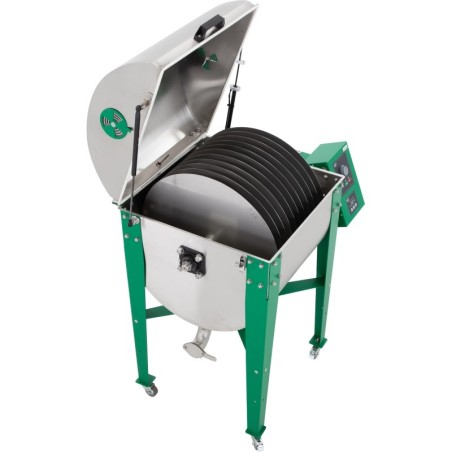
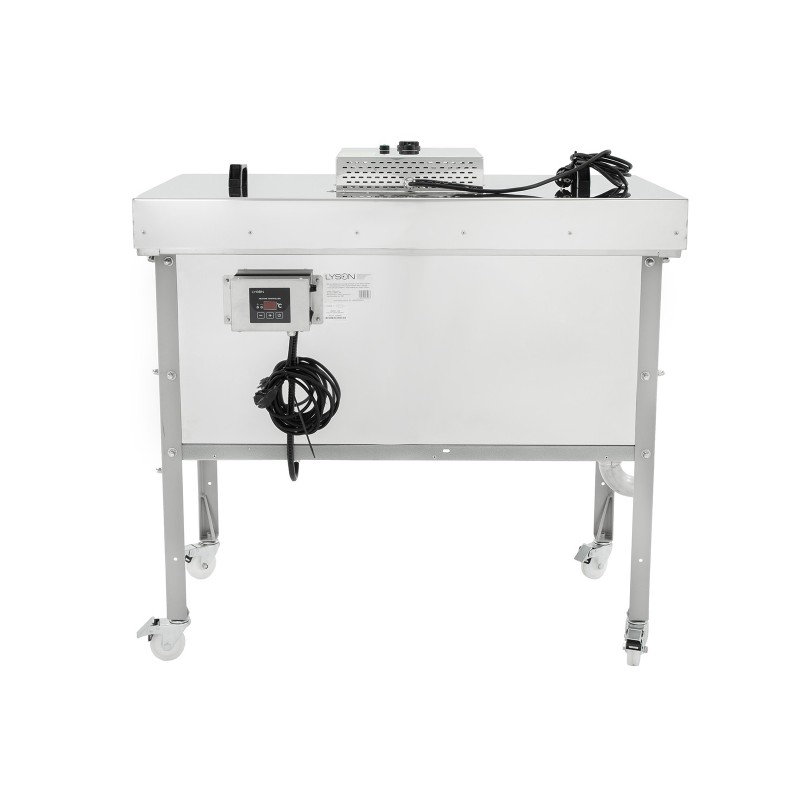
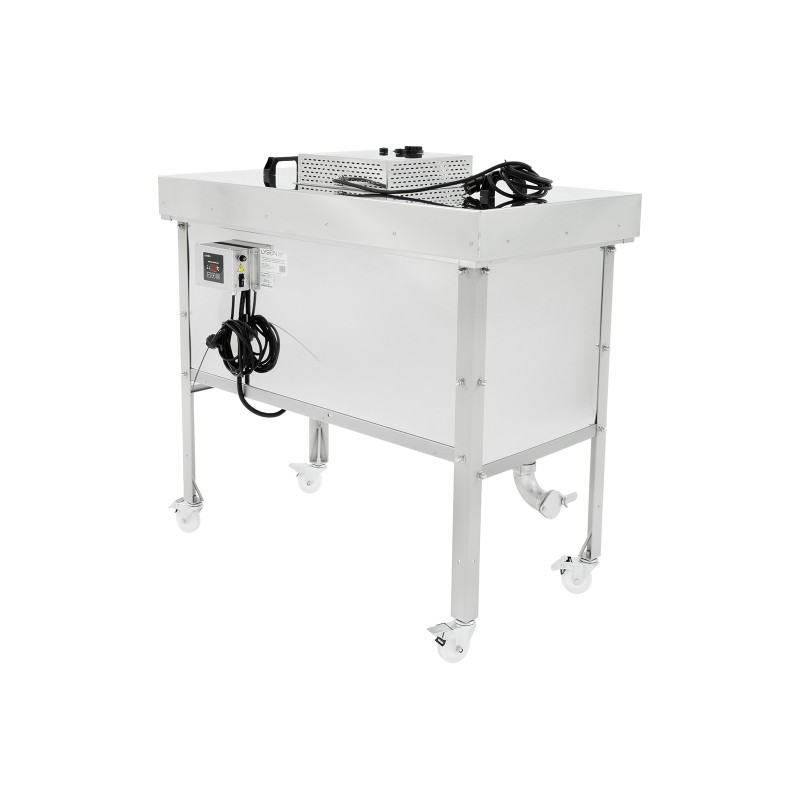
4-in-1 unit to separate honey and wax, melt cappings, decrystallise and use as an uncapping bench. Stainless steel construction, dual heating and precise control. Not compatible with Layens frames.
Multifunction 1,000 mm tank: it separates honey from cappings, melts, decrystallises and doubles as an uncapping bench.
One tank for four jobs that are usually four machines. What decides the result is not which of the four you choose but at what temperature you do it: the same tank can give back jar honey or industrial honey depending on where the thermostat sits.
01 · FOUR JOBS IN ONE TANK
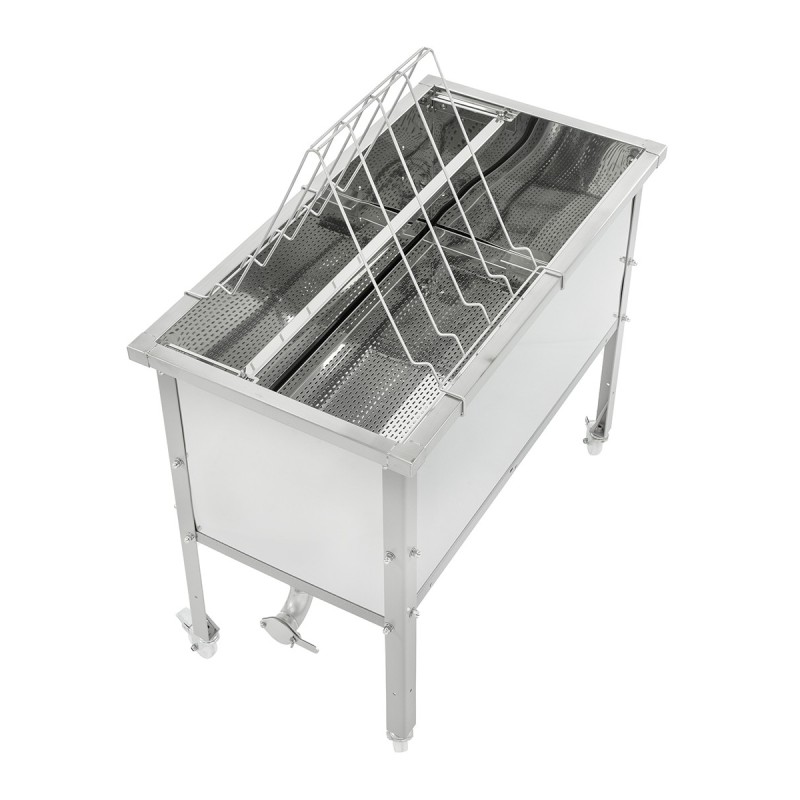
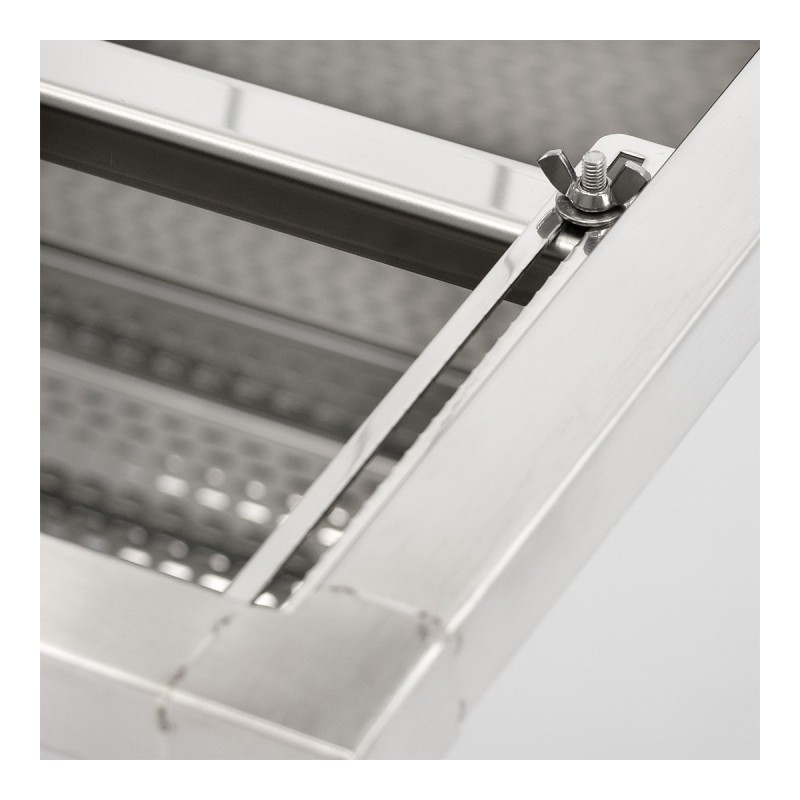
The perforated inner basket does the star job: you load the cappings, the honey drains and ends up separated below. With the adjustable inner bar, the same tank serves as an uncapping bench for the usual frame formats.
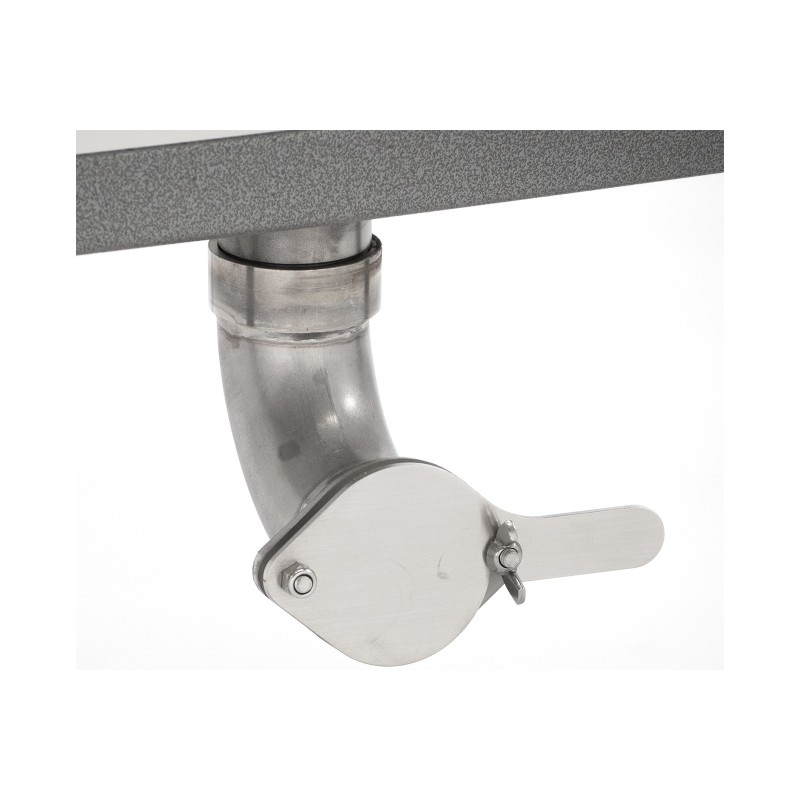
The bottom slopes towards the centre — 425 mm of inner height at the sides and 475 in the middle — and ends in a 6/4 inch gate valve, about 40 mm, to empty without leaving residue. It rides on heavy-duty wheels, which with 40 kilos of steel are not a luxury.
02 · AT 40 °C IT TAKES LONGER, COSTS LESS
The separation cycle works between 40 and 50 °C for four or five hours. It is worth understanding that this range is not neutral: thermal load is temperature times time, and five hours at 50 °C are not the same as five hours at 42.
Above 40 °C the honey's HMF starts to rise and the diastase to fall, and both are parameters in the analysis. In practice: for honey heading to a jar, the low end of the range and patience; leave it working overnight and by morning it has drained.
03 · PAST 65 °C THE PRODUCT CHANGES
Going above 65 °C, the tank melts the cappings with the honey inside and the two are then separated by settling. It is the useful mode for renewing material, processing slumgum or getting old combs out of the way.
But it deserves saying plainly: that honey is no longer packing honey. It comes out with a high HMF and its destination is industry or baking, not the counter jar. That is a decision taken before switching on, not after seeing the colour.
04 · HEAT ABOVE AND BELOW, NOT THE SIDES
The 2,000 W heated lid, with its 30 W fan, gives the fast enveloping heat; the 170 W bottom gives the gentle sustained heat, which is the one for separation and for decrystallising buckets and jars. The walls carry no heating, and that is deliberate: it stops the honey scorching against the side.
Each has its own control: a mechanical regulator with a capillary in the lid and an MHC-01 digital thermostat in the bottom. Adding the three loads gives 2.2 kW at 230 V single-phase, about 10 amps: it fits an ordinary workshop, but it wants a circuit of its own.
05 · BEFORE YOU BUY
Genuinely versatile, with one clear limit on format.
| ✓ FITS | Langstroth and Dadant frames (Blatt and US), with an adjusting bar for the width. |
| ⚠ A CIRCUIT OF ITS OWN | 2.2 kW at 230 V is about 10 A. Sharing a socket with another machine in the honey house is asking for the breaker. |
| ✕ NO LAYENS | The maker declares it incompatible with the Layens frame. If you work Layens, this is not the machine. |
| Functions | Separating honey and cappings · melting · decrystallising · uncapping bench |
|---|---|
| Inner dimensions | 1,000 × 505 mm |
| Inner height | 425 mm at the sides · 475 mm at the centre |
| Overall height | 860 mm without the lid |
| Heated lid | 2,000 W, with a 30 W fan |
| Heated bottom | 170 W |
| Total power | 2.2 kW at 230 V single-phase |
| Controls | Mechanical regulator with capillary (lid) · MHC-01 digital thermostat (bottom) |
| Valve | Stainless gate valve, 6/4 inch (about 40 mm) |
| Material | Acid-resistant stainless steel |
| Mobility | Legs with heavy-duty wheels |
| Weight | 40 kg |
| Made in | Poland, LYSON |
| Reference | W4037_AB |
Data sheet
1 file available
4-in-1 unit to separate honey and wax, melt cappings, decrystallise and use as an uncapping bench. Stainless steel construction, dual heating and precise control. Not compatible with Layens frames.
check_circle
check_circle