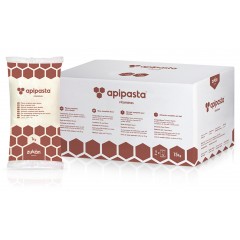
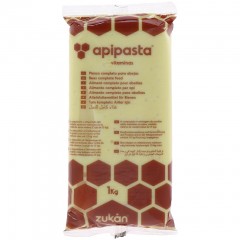
 Apipasta with vitamins 15kg
 Beecomplet® Spring 14Kg
 Beekeeper suit with round veil
 Oxalic acid 1kg
 Beeswax Foundation 5kg
 Fresh royal jelly 20g
 Classic honey jar 1kg comb-lines TO77 - Pack of 16 units
 Promotor L Apis 1 litre


 Share in WhatsApp
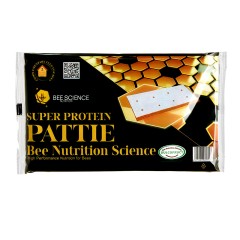
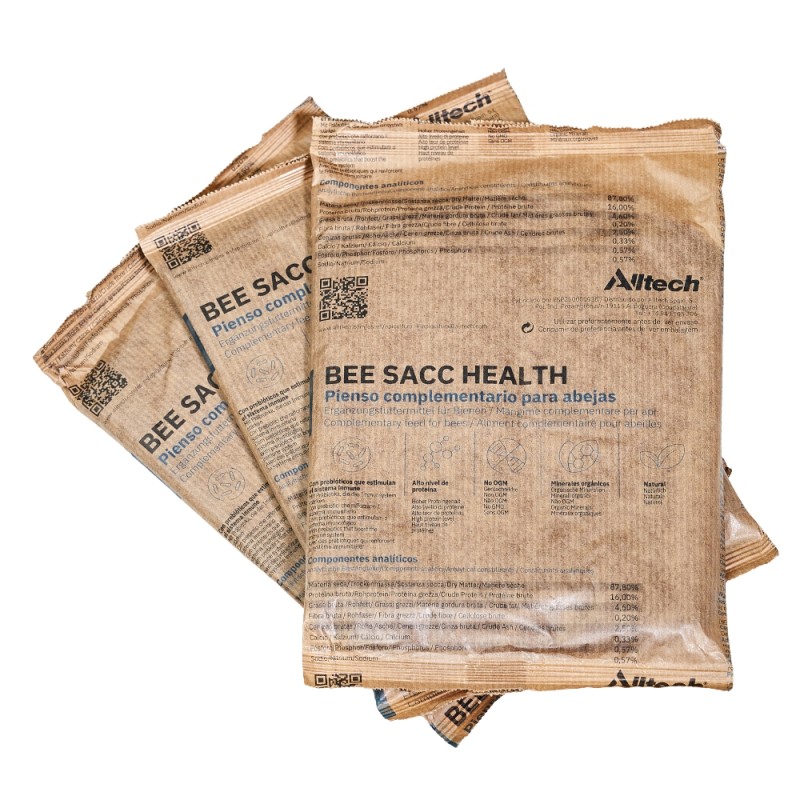
16 % CRUDE PROTEIN | 300 g SINGLE PATTY |
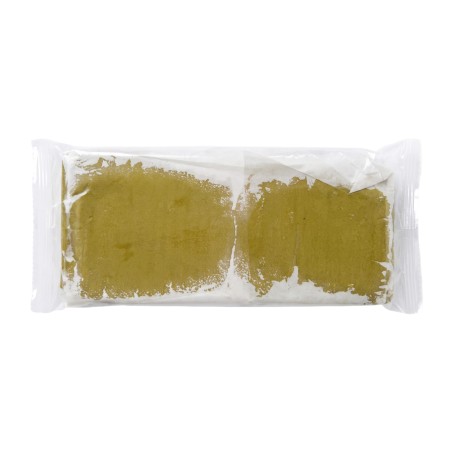
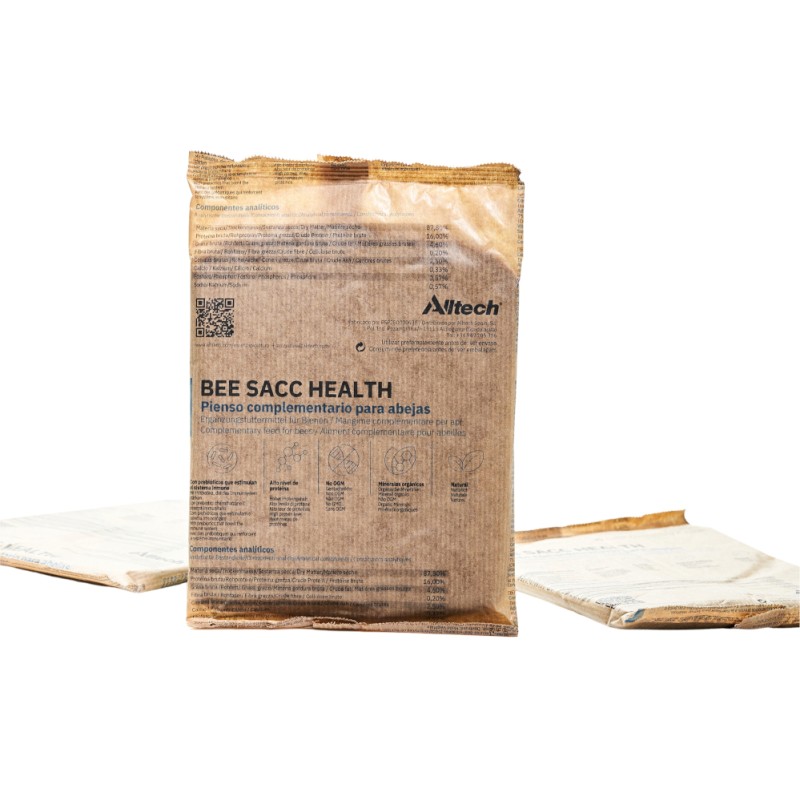
300 g protein patty at 16 % crude protein, for when the field offers no pollen.
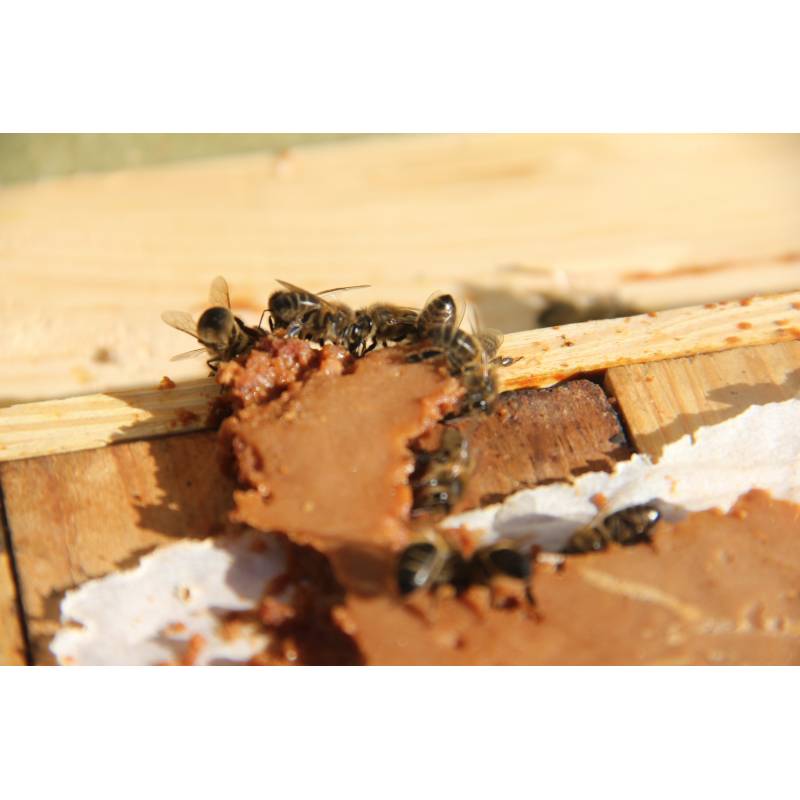
It goes on top of the frames, no feeder needed, and its moment is the weeks before wintering and the gaps when there is brood to carry and no pollen coming in: as a guide, one per hive a week, topping up as soon as little more than the paper is left; a single patty all autumn makes little difference.
01 · WHY PROTEIN
From the protein in its diet the bee builds vitellogenin and stores it in its fat body: that is where royal jelly, nutrient transport and much of its longevity come from. A bee that goes into winter with little fat body lives less and starts the spring brood worse. That is why this patty goes on before wintering, not once the cold is already there.
02 · WHERE IT SITS
To build up colonies of the Iberian bee, the good-practice manual by Pajuelo Consultores (Spain) recommends a patty of around 10 % protein: with higher percentages, this bee may be slow to take it. At 16 % crude protein, this one sits above that reference. And the protein does not come from plant meal but from Bee Polenate, a hydrolysed yeast extract with free amino acids, vitamins and nucleotides.
03 · WHEN TO GIVE IT
The maker places it in the weeks before wintering: that is, while the queen is still laying and the bees that will overwinter are emerging, from late August into autumn depending on your area, and only if no pollen is coming in; once the cluster has formed they no longer touch it, and where autumn pollen is coming in, the patty adds nothing to the cluster. Also in confinement, swarming and spells of little pollen in the field. Making up nucs also fits, because young bees are what counts there. What it does not do: it does not cure, it does not replace varroa control, and it does not turn a colony without bees into a strong one.
04 · HOW TO PUT IT ON
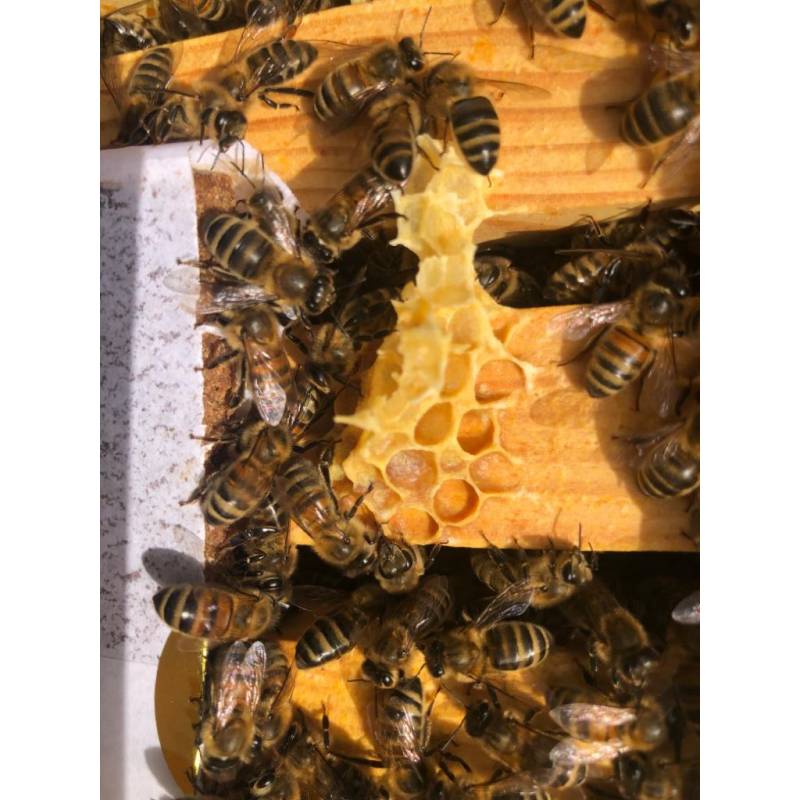
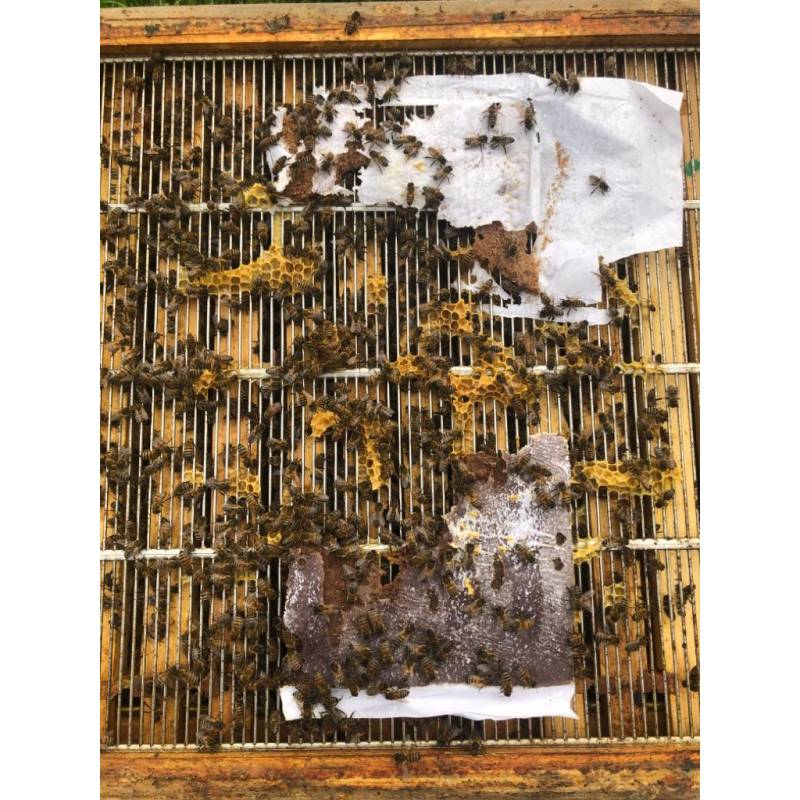
Tear the wrapper and lay the patty face down on the top bars of the brood frames, centred over the cluster and touching the bees; an empty super or the crown board is only there for headroom, and the patty never goes in a super of its own or in a corner. On double brood, it goes between the two boxes, above the one with the brood; if the cluster moves up, the patty follows. The paper holds the paste and slows it drying out; cut a small slit, not a big hole. If a colony leaves it half eaten, check first where it was — more than four or five centimetres from the brood and they barely touch it — and whether pollen was coming in; whatever sits outside the cluster dries out and goes uneaten. On nucs and mini-plus boxes it works well cut into two-finger strips laid across the top bars.
⚠ PRECAUTIONS
Do not give it during a flow or with honey supers on: what goes up into the super ends up in the honey you are going to jar. Take the remains out before supering.
05 · BEFORE YOU BUY
This reference is the single 300 g patty. The first time, try it on about ten hives before buying for the whole apiary, as the manual advises; and if what is missing is energy for winter, this is not the one.
| ✓ FITS | Any hive: it sits on the top bars, no feeder needed. |
| ⚠ NOT INCLUDED | Winter energy feeding. For sugar stores, a fondant or syrup separately. |
| Format | Individual 300 g patty |
|---|---|
| Crude protein | 16.00 % |
| Protein source | Bee-Polenate, a hydrolysed yeast extract with the fibre taken out |
| Dry matter | 87.80 % |
| Other components | Crude fat 4.60 % · crude fibre 0.20 % · crude ash 2.50 % |
| Minerals | Calcium 0.33 % · phosphorus 0.57 % · sodium 0.57 % |
| Trace elements and vitamins | Chelated zinc, selenium from selenised yeast and vitamin C |
| Use | The weeks before wintering, confinement, swarming and pollen gaps |
| Placement | On the brood frames, with the wrapper torn open |
| When not to use it | During a flow and with honey supers on |
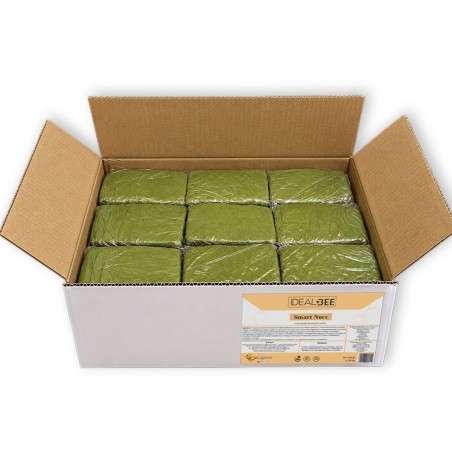
| Packing | Vacuum bags of 10 patties (3 kg); each patty wrapped in cellulose paper |
| Storage | In the original closed packaging, somewhere cool and dry (ideally below 20 °C), out of direct sun and away from strong smells. Once the bag is opened, the manufacturer advises using it within 72 hours |
1 file available