 Apipasta with vitamins 15kg
 Beecomplet® Spring 14Kg
 Beekeeper suit with round veil
 Oxalic acid 1kg
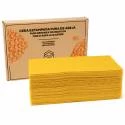 Beeswax Foundation 5kg
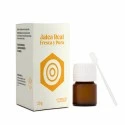 Fresh royal jelly 20g
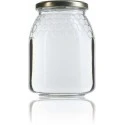 Classic honey jar 1kg comb-lines TO77 - Pack of 16 units
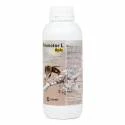 Promotor L Apis 1 litre

 Share in WhatsApp
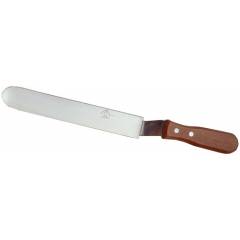
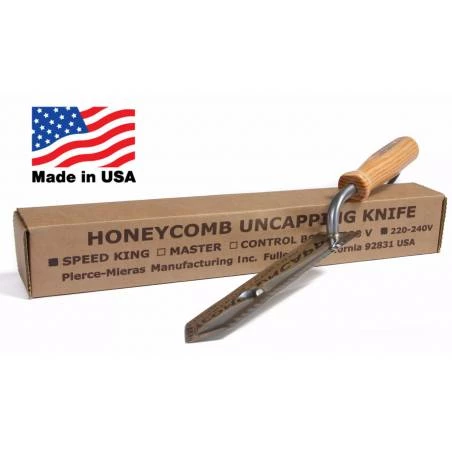
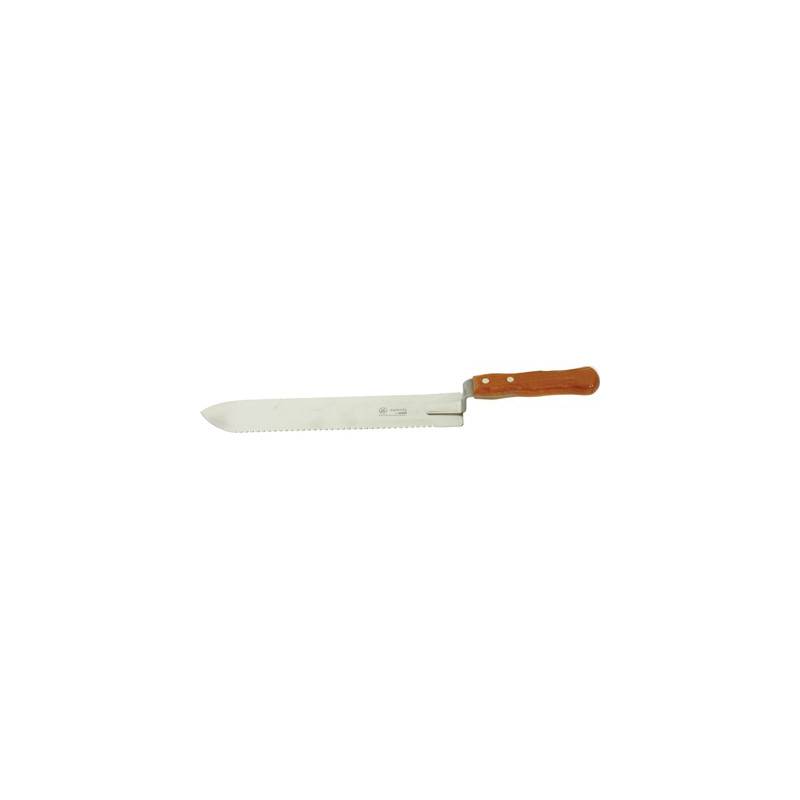
A serrated uncapping knife with a 1.5 mm blade in 420 stainless steel and a flat kotibé wood handle.
The serration is not a gimmick: it is what makes the blade bite into an old comb instead of skidding over it. Made in Spain.
01 · USE
A serrated edge suits dark, old wax — the comb that has carried several generations of brood and is full of pupal cocoons: there the teeth saw through the capping instead of crushing it. On new, pale, well-built comb the result is the opposite — it tears more than it cuts — and a plain knife does better. It is not that one is better than the other: it depends on the state of the frame, and anyone extracting from everything usually keeps both on the bench.
02 · MAINTENANCE
An uncapping knife works far better sharp and warmed. The old honey-house trick: keep two or three in a container of hot water and swap them as they cool. With a warm blade the capping cuts clean and the wax does not stick to the steel; with a cold blade you end up dragging honey and breaking comb. Dry it before putting it away: 420 stainless holds up well, but it is a cutlery stainless, not a laboratory one.
03 · BEFORE YOU BUY
| ✓ FITS | Old, dark wax with pupal cocoons. |
| ✕ DOES NOT FIT | New, pale comb: a plain knife cuts better there. |
| Blade | 420 stainless steel, serrated |
|---|---|
| Thickness | 1.5 mm |
| Length | 21 cm |
| Handle | Natural kotibé wood, flat |
| Manufacture | Spain |
Data sheet

Write your question
check_circle
check_circle