 Apipasta with vitamins 15kg
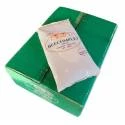 Beecomplet® Spring 14Kg
 Beekeeper suit with round veil
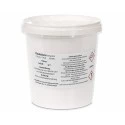 Oxalic acid 1kg
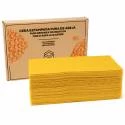 Beeswax Foundation 5kg
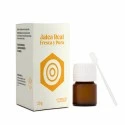 Fresh royal jelly 20g
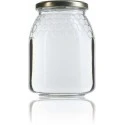 Classic honey jar 1kg comb-lines TO77 - Pack of 16 units
 Promotor L Apis 1 litre

 Share in WhatsApp
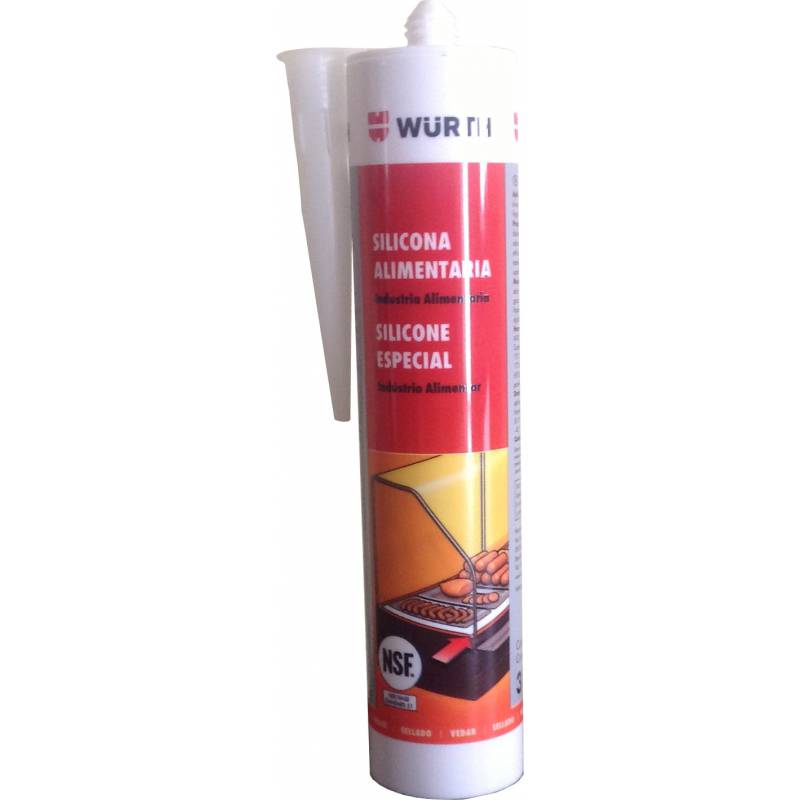
310 ml CARTRIDGE | 3 mm/day CURE IN DEPTH |
-40 / +180 °C TEMPERATURE RANGE | 5-40 °C APPLICATION TEMPERATURE |
Würth E4 TOP FG acetic-cure silicone sealant, 310 ml cartridge in transparent, for the joints of beekeeping equipment and of the honey house.
This is not a building sealant with a new label: it comes from Würth's food-industry range. That gives it paperwork, and also a list of substrates the manufacturer rules out.
01 · FOOD USE
Würth España certifies this silicone to NSF/ANSI 51, the standard for food equipment materials, with a toxicological analysis reviewed by NSF. Its data sheet adds four sections of FDA 21 CFR and BS 6920 for contact with drinking water. The limit comes from the manufacturer itself: it does not recommend its silicone acetates in direct contact with food or under water for long periods. The bead seals the equipment and the room, not the face the honey washes over.
02 · CURING
As it sets it releases acetic acid, hence the vinegar smell of the first few hours. The manufacturer's data sheet gives 10 minutes of skin formation at 23 °C and 50 % humidity, so tool the bead straight after extruding it. In depth it advances at 3 mm a day. Apply it between 5 and 40 °C: out in the apiary in January at 2 °C it will not cure properly, so that job belongs in the workshop.
03 · SUBSTRATES
Würth gives it adhesion on glass, vitrified surfaces, ceramic tiles, plastics and stainless steel, which is what settling tanks are made of. On timber and other absorbent substrates you must first apply the silicone acetate primer, art. 0892 170. Where it does not go is on alkaline surfaces: the manufacturer rules out concrete, mortar and fibre cement. The cured bead works from -40 to 180 °C, takes UV and weather and stretches 250 % before breaking.
04 · BEFORE YOU BUY
It is supplied in transparent only: there is no white or grey version, and the manufacturer warns that transparent silicones can yellow where little light reaches them. Standard cartridge gun, not included. It cannot be painted over. Shelf life, 24 months from production.
| ✓ FITS | Glass and vitrified surfaces, ceramic tiles, stainless steel and most plastics. Timber and other absorbent substrates, with primer 0892 170 first. |
| ✕ DOESN'T FIT | Concrete, mortar and fibre cement, which the manufacturer rules out as alkaline. PTFE, PE, PP and PA seal poorly. No aquariums, no prolonged immersion. |
Work in a ventilated space and wear gloves, goggles and a mask: the acetic acid given off while curing irritates the eyes and the mucous membranes.
That same acid oxidises metals. Würth states it must not come into contact with lead, copper, brass or zinc, and galvanised steel is zinc: use another sealant on those parts.
Follow the 2:1 rule, twice as wide as it is deep, and stop the bead bonding on three faces. Let it cure through before the part goes back into service: at 3 mm a day, 6 mm means two days.
| Reference | 010511 |
|---|---|
| Manufacturer reference | E4 TOP FG · art. 0892 844 31 |
| Contents | 310 ml |
| Colour | Transparent |
| Chemical base | Silicone acetate |
| Shore A hardness | 20 (ISO 868) |
| Skin formation | 10 min (23 °C, 50 % RH) |
| Cure rate | 3 mm/day |
| Elongation at break | 250 % (ISO 8339) |
| Temperature resistance | -40 to 180 °C |
| Application temperature | 5 to 40 °C |
| Density | 1.02 g/cm³ (ISO 1183-1 A) |
| Shelf life | 24 months from production |
| Certification | NSF/ANSI 51; FDA 21 CFR 175.105, 175.300, 177.1210 and 177.2600; BS 6920 |
| Not suitable for | Concrete, mortar and fibre cement; lead, copper, brass and zinc; PTFE, PE, PP and PA; aquariums; not paintable |
Data sheet
Specific References

Sorry, no results found.
Write your question
check_circle
check_circle