 Apipasta with vitamins 15kg
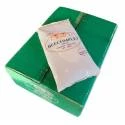 Beecomplet® Spring 14Kg
 Beekeeper suit with round veil
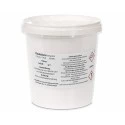 Oxalic acid 1kg
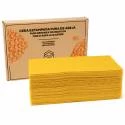 Beeswax Foundation 5kg
 Fresh royal jelly 20g
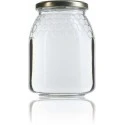 Classic honey jar 1kg comb-lines TO77 - Pack of 16 units
 Promotor L Apis 1 litre
- Out of stock
- To order

 Share in WhatsApp
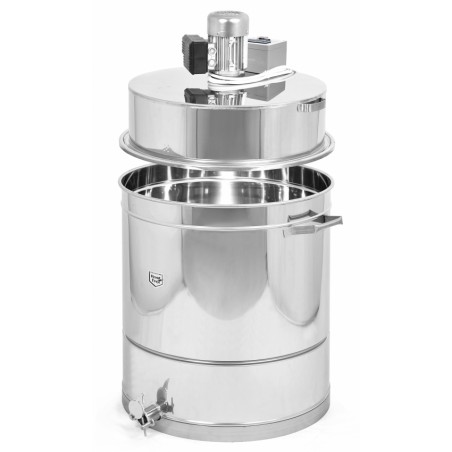
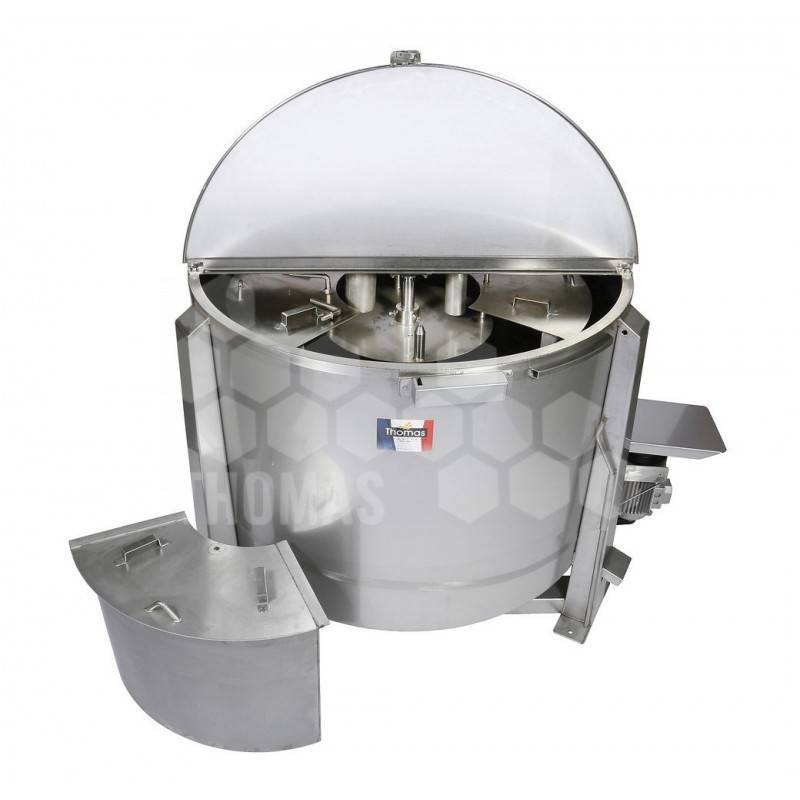
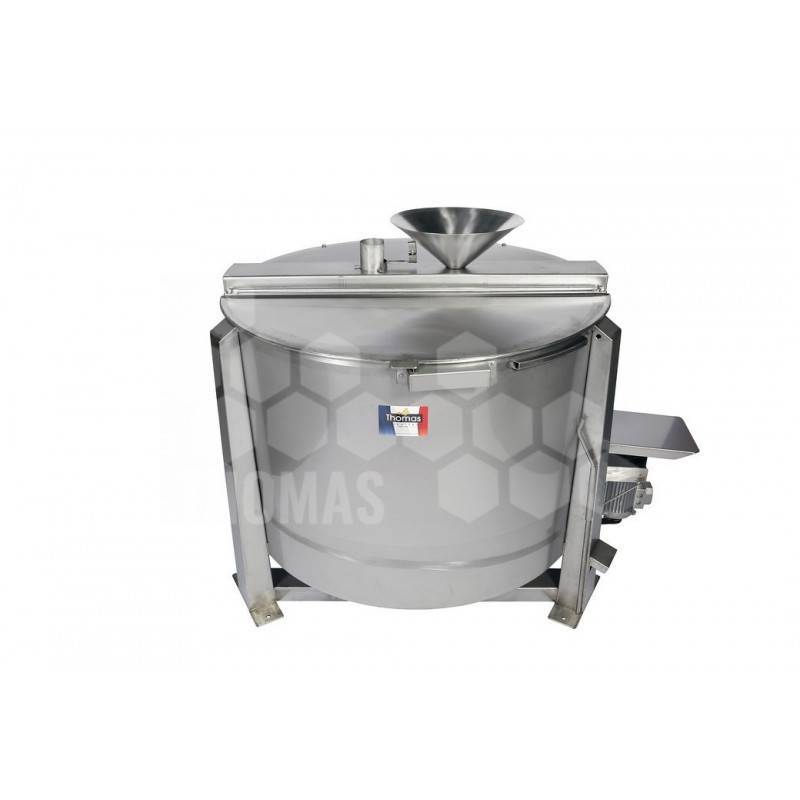
Cappings centrifuge pro, model SPINOMEL manufactured by the french brand THOMAS. It's made of double-walled stainless steel. The benchmark in the professional processing of honey and cappings.
THOMAS SPINOMEL: filters up to three tonnes of honey a day, or the cappings of those three tonnes, with two wax discharges.
It is the machine that does not clog. That is the problem it solves and what justifies its size. In an ordinary spinner, wax migrates outward and ends up blocking the basket. The SPINOMEL works with a deliberately gentle centrifugal force that keeps the wax particles in the centre, and the honey filters progressively without anything closing up.
01 · THE WAX STAYS IN THE CENTRE
Wax is lighter than honey, so its natural tendency in a spinner is to move to the wall — and that is where it forms the cake that blocks the basket and forces a stop. Here the speed is calculated so that migration does not happen: the particles stay in the centre while the honey passes through.
The practical result is that a three-tonne day is handled with two discharge operations of the spun wax, instead of continuous stops to unblock it.
02 · THREE TONNES A DAY
The machine has a double function: at low speed it filters honey continuously, and in the other mode it dries the cappings, separating wax from honey. The declared figure — 3,000 kg a day — holds for either: it filters that much honey, or processes the cappings that extracting it generates.
And it takes honeys of very different viscosities, heather included, which is the hard case of any extraction room. It is supplied with four baskets.
03 · IT IS CLEANED ONCE OR TWICE A DAY
The maker states that the machine must be cleaned once or twice a day. Take it for what it is: part of the working cycle, not optional advice. On a three-tonne day, that cleaning has to be planned just as the wax discharges are.
The build helps: double-wall stainless steel, with no more complication than necessary in the parts that have to be opened.
04 · WHERE IT SITS IN THE RANGE
At Ø 1,000 mm and 1,210 mm tall, it is the largest model in the family. Below it are the Ø 320 and Ø 240 baskets, sized respectively for the order of a thousand kilos of cappings a day and for operations of one hundred to one hundred and fifty hives.
If the harvest does not reach three tonnes a day, the previous step is probably machine enough. If it exceeds that regularly, this is the one that keeps the room from stopping. Single-phase 220 V supply and three years of manufacturer's warranty.
05 · BEFORE YOU BUY
The big step in filtering and drying.
| ✓ A GOOD FIT | Rooms of up to 3 tonnes a day, heather honeys included. Four baskets supplied. |
| ⚠ DAILY CLEANING REQUIRED | Once or twice a day. It is part of the working cycle, not an option. |
| ✕ TOO MUCH BELOW THAT VOLUME | With smaller harvests, the Ø 320 or Ø 240 models do the same job for far less. |
| Model | SPINOMEL |
|---|---|
| Functions | Continuous honey filtering and cappings drying |
| Capacity | Up to 3,000 kg of honey a day, or its cappings |
| Wax discharges | Two per day |
| Honeys | Various viscosities, heather included |
| Baskets | Four, supplied |
| Cleaning | Once or twice a day |
| Diameter | 1,000 mm |
| Height | 1,210 mm |
| Material | Double-wall stainless steel |
| Supply | Single phase 220 V |
| Warranty | 3 years |
| Built by | THOMAS, France |
| Reference | CTF003 |
Cappings centrifuge pro, model SPINOMEL manufactured by the french brand THOMAS. It's made of double-walled stainless steel. The benchmark in the professional processing of honey and cappings.
check_circle
check_circle