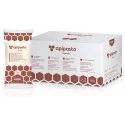
 Apipasta with vitamins 15kg
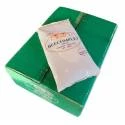 Beecomplet® Spring 14Kg
 Beekeeper suit with round veil
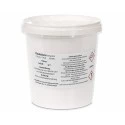 Oxalic acid 1kg
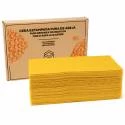 Beeswax Foundation 5kg
 Fresh royal jelly 20g
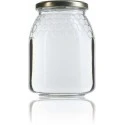 Classic honey jar 1kg comb-lines TO77 - Pack of 16 units
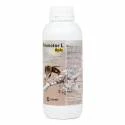 Promotor L Apis 1 litre

 Share in WhatsApp
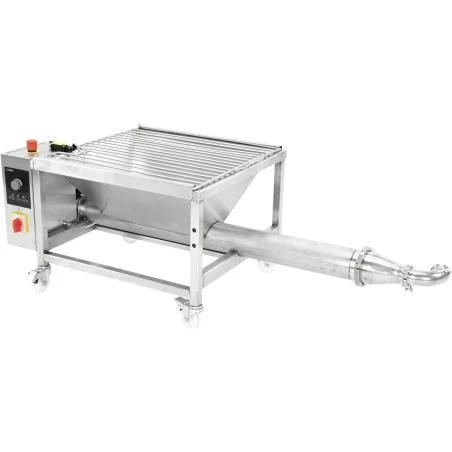
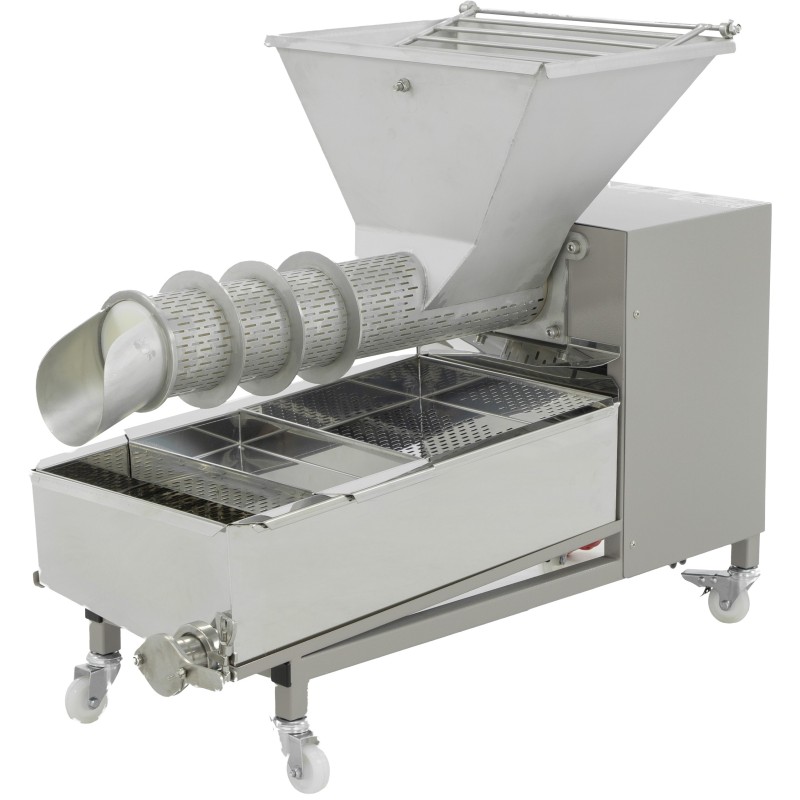
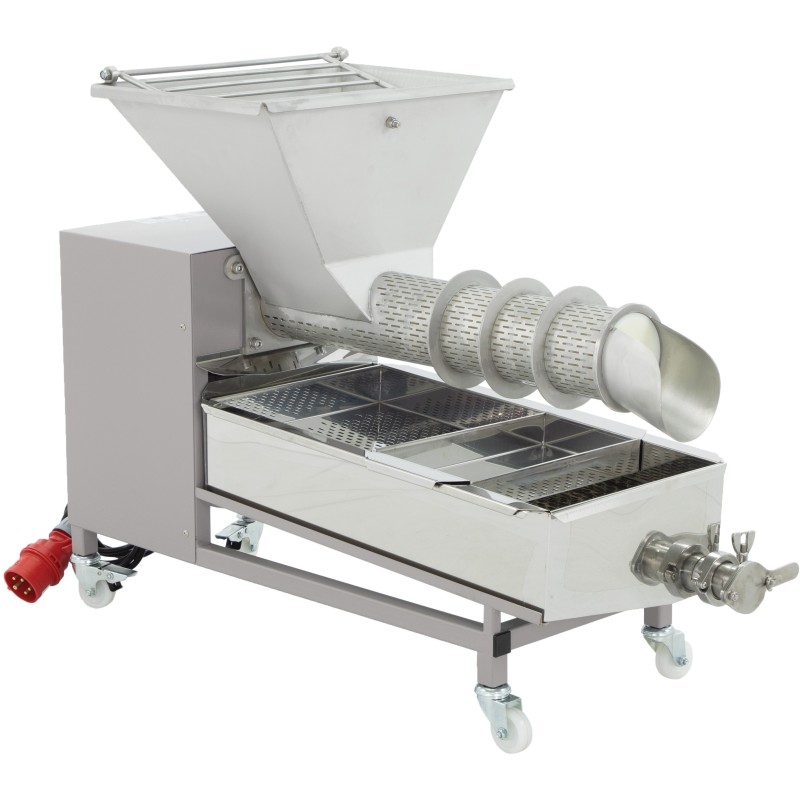
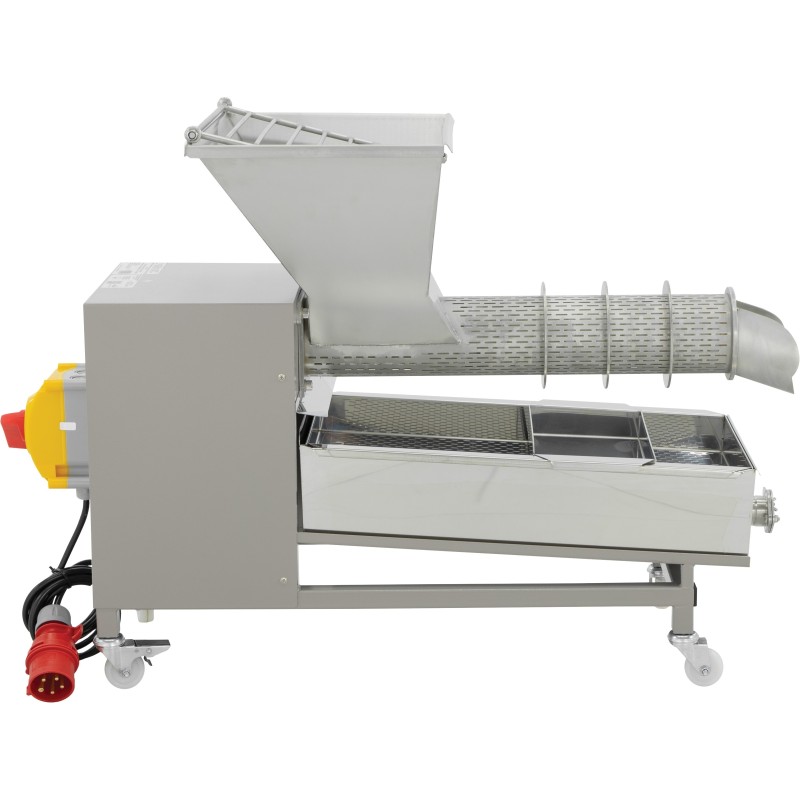
Mechanical honey and wax separator. Capacity up to 50 kg/h. Made of acid-resistant stainless steel. Compact, efficient, and easy to transport.
Cappings press of 50 kg/h: it recovers cold the honey left in the wax, and it asks for 400 V three-phase.
The first thing to look at is not the throughput. It is the supply: the 0.55 kW geared motor runs on 400 V three-phase, so before anything else check what reaches the honey house. The rest of the machine is deliberately simple.
01 · 400 V THREE-PHASE: THE FIRST FILTER
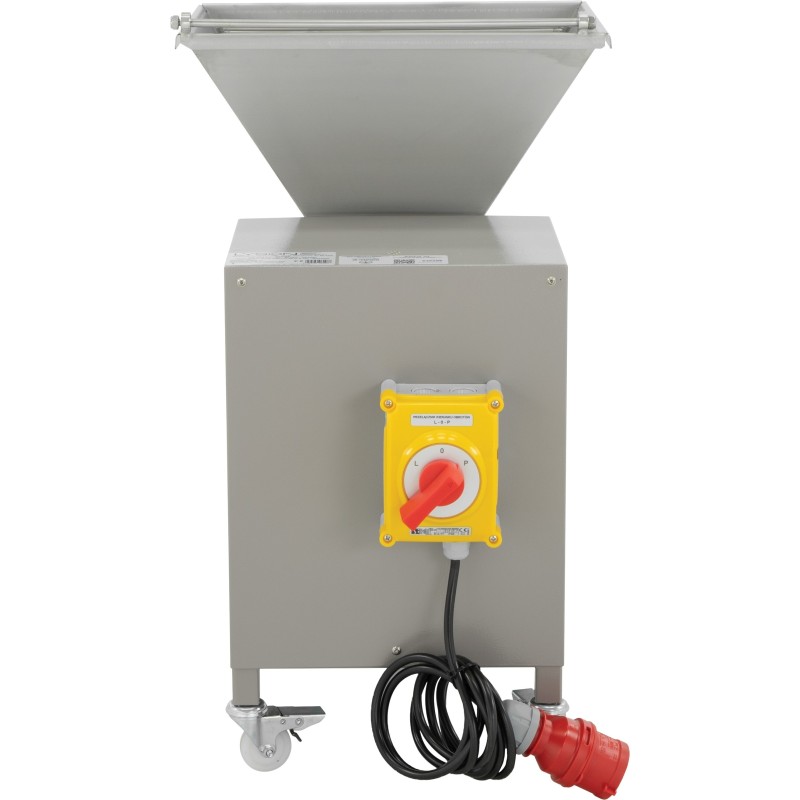
The control is an L-0-P switch with no speed regulation: it starts, it works at its 14 revolutions a minute and it stops. There are no programmes to set and nothing that can drift out of calibration.
That simplicity has a flip side: the machine does not adapt to drier or wetter cappings, you adapt by feeding it more slowly. And at 45 kilos on wheels it moves around the floor, but it does not go up to a mezzanine.
02 · HOW IT SEPARATES HONEY FROM WAX
The cappings enter a perforated cylinder where an auger pushes and compresses them against the wall. The honey leaves through the perforations and falls to the sieve below; the wax, now compacted, keeps moving forward until it comes out at the end.
The result is two streams separated continuously: honey underneath and a cake of dry wax in front. The 50 kg/h figure refers to cappings processed, not honey obtained: what you recover depends on how wet the cappings come off the uncapping bench.
03 · PRESSING IS NOT MELTING
The classic alternative for recovering that honey is to melt the cappings in a boiler. It works, but it puts heat into a product that pays for it: above 40 °C the HMF of the honey rises and the diastase falls, and both are legal parameters measured in the analysis.
A press works cold, at room temperature. The honey that comes out has taken no thermal load at all, so it can go back into the harvest stream instead of being written off as second-grade honey.
04 · WHAT COMES OUT NEEDS ONE MORE STEP
The pressed honey carries wax fines and is worth settling or filtering before packing; the press sieve holds back the coarse material, it does not refine.
The wax comes out compact and dry, fit to go straight to the melting boiler. That is the right order in the honey house: press cold first to take the honey out, and only then heat the wax, which does take heat.
05 · BEFORE YOU BUY
A machine for a working floor, not for a garage.
| ✓ FITS | Honey houses with 400 V three-phase that uncap in series and want the honey out of the cappings without heating it. |
| ⚠ CHECK THE SUPPLY | On a single-phase 230 V installation this machine will not start. It is the filter that comes before any other consideration. |
| ✕ IT NEITHER FILTERS NOR MELTS | The pressed honey needs settling afterwards and the wax needs a boiler. The press only separates. |
| Type | Cappings press-extruder, continuous operation |
|---|---|
| Capacity | Up to 50 kg/h of cappings |
| Motor | 0.55 kW geared motor |
| Supply | 400 V three-phase |
| Auger speed | Up to 14 rpm |
| Control | L-0-P switch, no speed regulation |
| Material | Acid-resistant stainless steel |
| Motor cover | Black lacquered steel |
| Dimensions | 1,050 × 400 × 680 mm |
| Weight | 45 kg, on wheels |
| Made in | Poland, LYSON, OPTIMA range |
| Reference | W20970_OP |
1 file available
Mechanical honey and wax separator. Capacity up to 50 kg/h. Made of acid-resistant stainless steel. Compact, efficient, and easy to transport.
check_circle
check_circle