
-
Beehives
- Complete beehive
- Accessories
-
Nuc hives
- Nucs by format
- With bees & mating
- Spare parts
-
Bee equipment
- For the apiary
- For the beekeeper
-
Clothing
- Clothing Accessories
-
Beeswax
-
Pure beeswax
- Beeswax and foundation
- Beeswax foundations
- Melting and rolling beewax
-
Pure beeswax
-
Bee feed
- Accessories and source materials
- Utensils
-
Bee health
- Varroa Treatments
- Diseases control
- Nutraceuticals
-
Extraction and bottling
- Before extraction
- Honey extraction
- After extraction
-
Bee pollen
- Harvest
- Indicted
-
Honey packaging
- Flasks per utility
- Flasks by size
- Other packaging
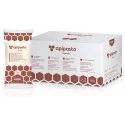 Apipasta with vitamins 15kg
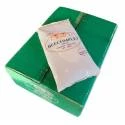 Beecomplet® Spring 14Kg
 Beekeeper suit with round veil
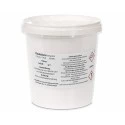 Oxalic acid 1kg
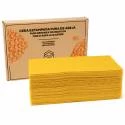 Beeswax Foundation 5kg
 Fresh royal jelly 20g
 Classic honey jar 1kg comb-lines TO77 - Pack of 16 units
 Promotor L Apis 1 litre
Honey Mixers
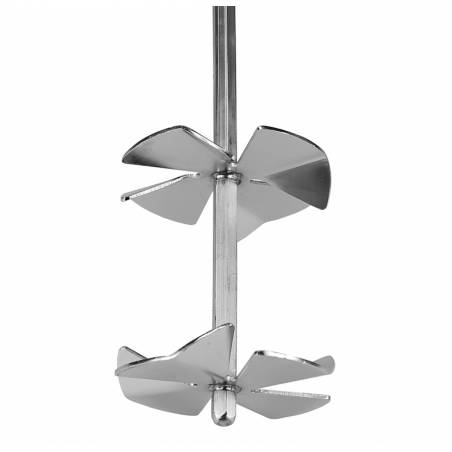
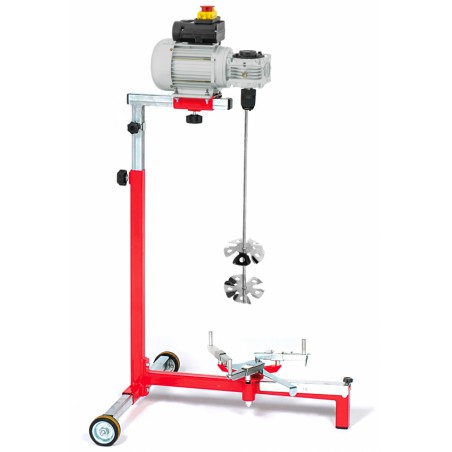
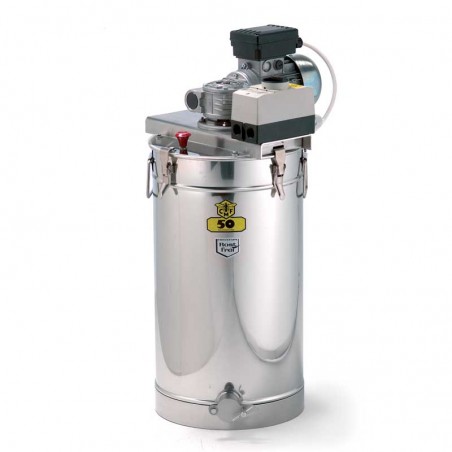
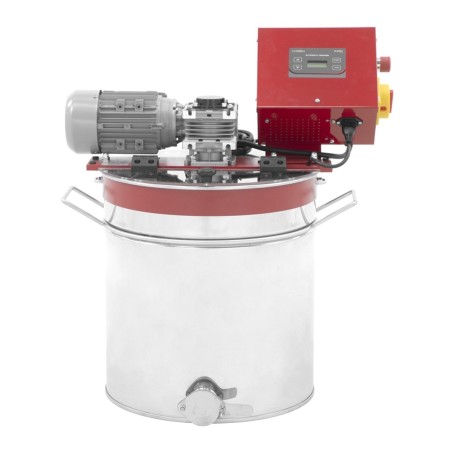
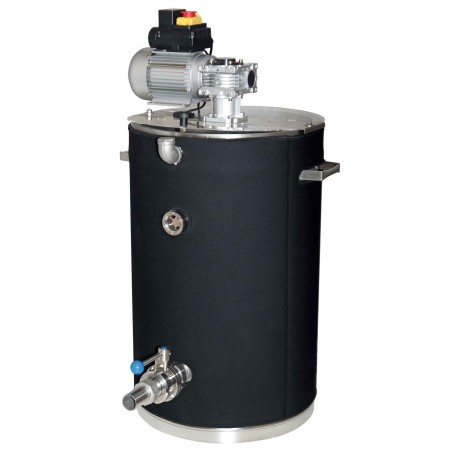
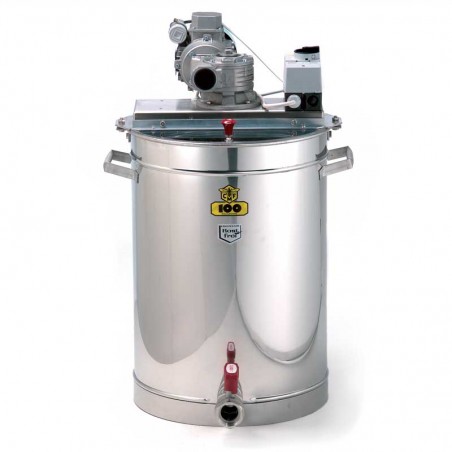
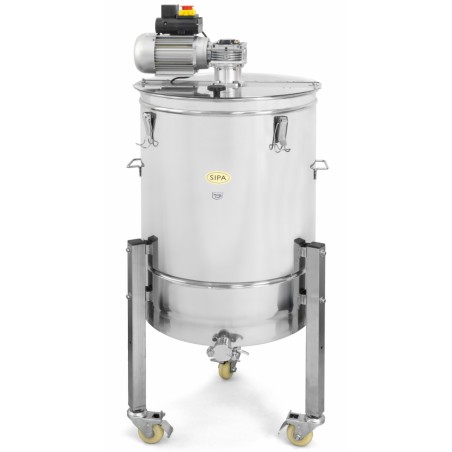
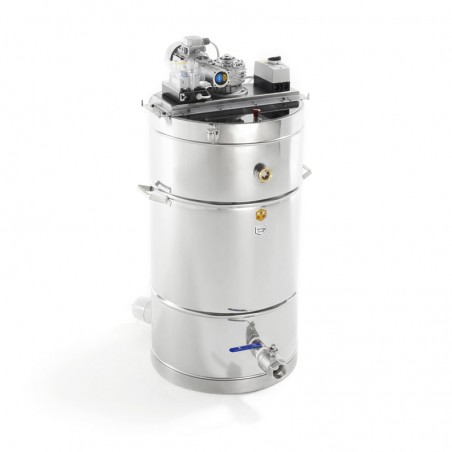
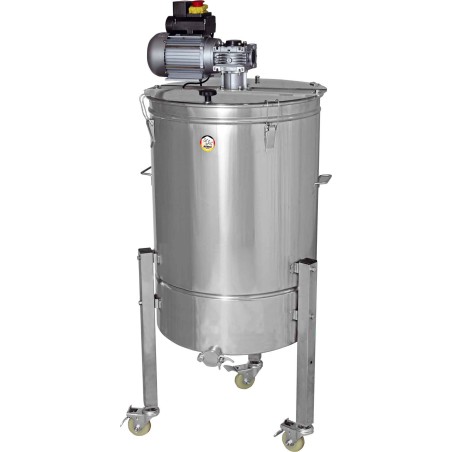
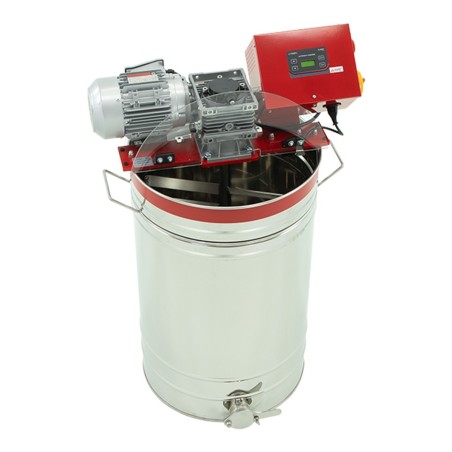
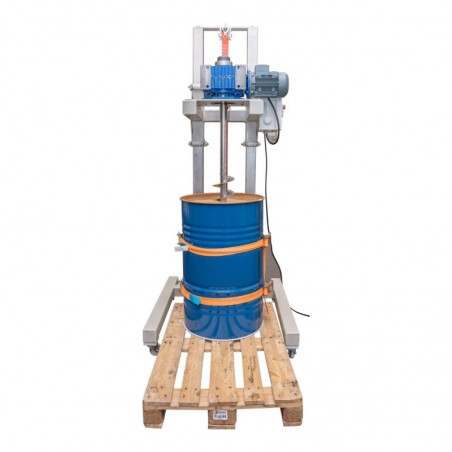
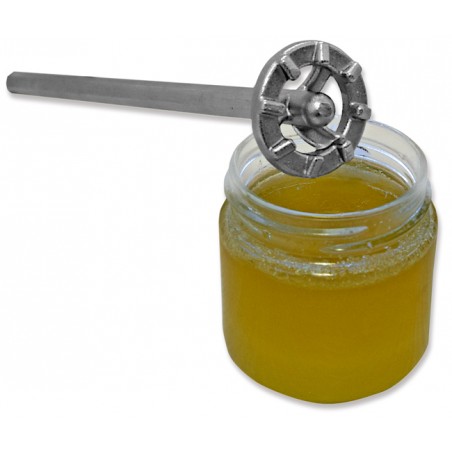
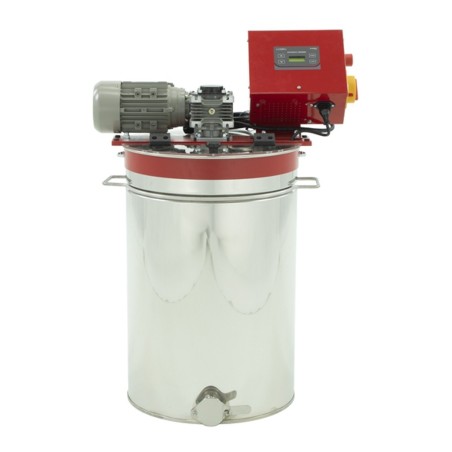
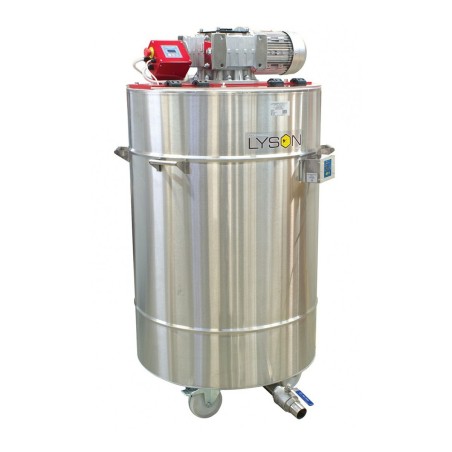
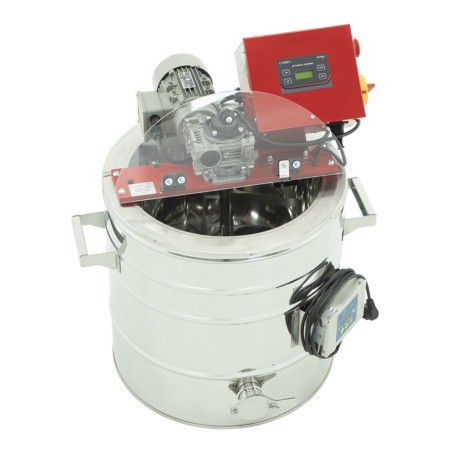
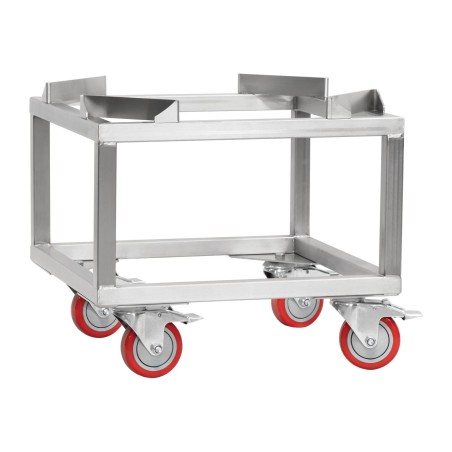
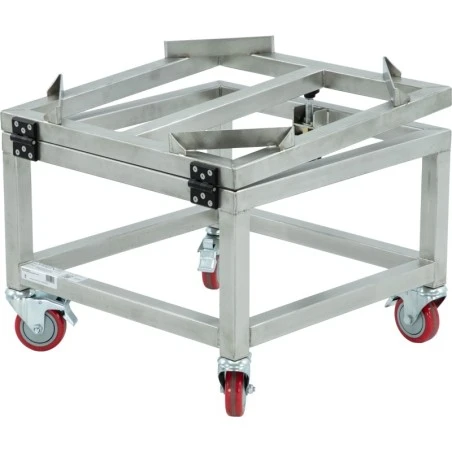
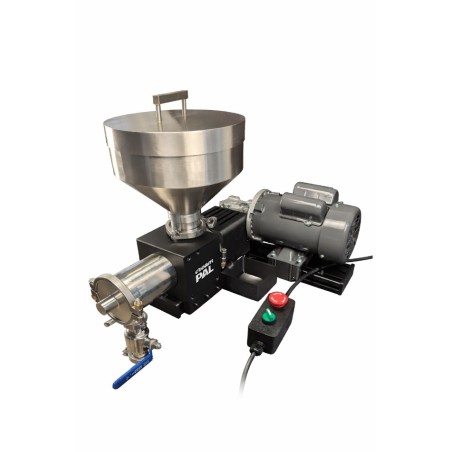
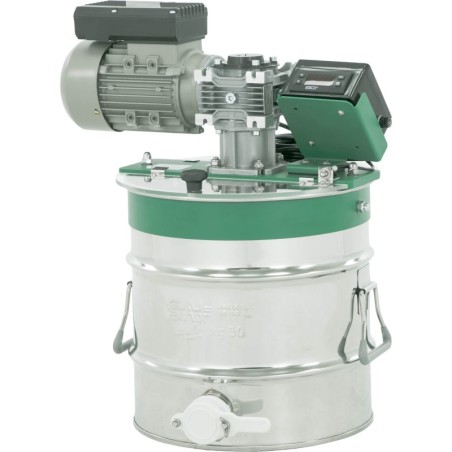
Honey mixers and creamers, from the €32 adaptable impeller to the €9,200 workshop unit. Plus wheeled stands and transport trolleys.



Creamed honey is not whipped: it is seeded
Plenty of people call creaming the act of whipping a honey that is already crystallising, and what comes out is honey with air inside and a white layer of bubbles on top. The method that is genuinely predictable is seeding: start from warmed base honey to break down the large crystals, cool it towards 14 ºC, add 5-10 % finely crystallised honey as seed, homogenise gently for about 20 minutes without introducing air, then pack and hold at that 14 ºC for around two weeks. Depending on the honey, maturation runs from two weeks to a month.
And what is almost never said when selling it: creamed honey depends on temperature to stay creamed. Above 28 ºC the glucose crystals begin to dissolve and the texture is lost; fluctuations give irregular texture. If you sell in summer or ship without temperature control, that jar can reach the customer as something else. Do not promise it needs no cold storage if your stability depends on a chilled room.
Honey Mixers
Mixing honey solves two different problems, and it is worth knowing which one you have before buying a machine.
Homogenising a batch
If you harvest from several apiaries or on several dates, every drum is different: colour, moisture and taste do not match. Homogenising is making every jar in a batch the same product, which is what lets you sell it under a single spec and stand behind it. Without that, a repeat customer finds a different honey.
Making creamed honey
That is another matter. Honey crystallises on its own, and left alone it crystallises coarse. The creamer stirs it while it sets so the crystal forms fine, and the result is spreadable instead of gritty. Nothing is added: it is the same honey with the crystal under control.
Here rosemary is the classic ally, because it crystallises fine naturally and is used as a seed to induce that crystal size in other honeys.
What you need by volume
- Mini mixer for jars (€29) — for trials and small batches.
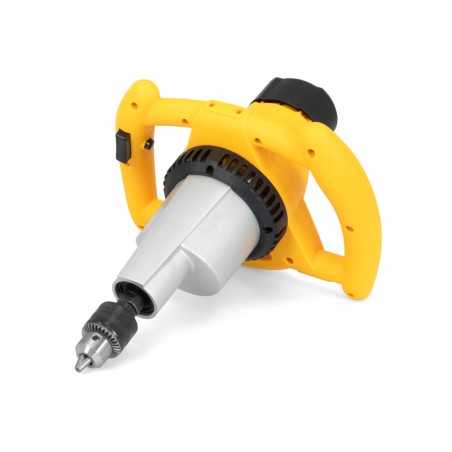
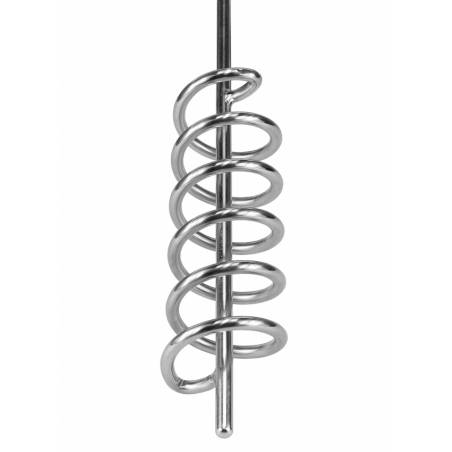
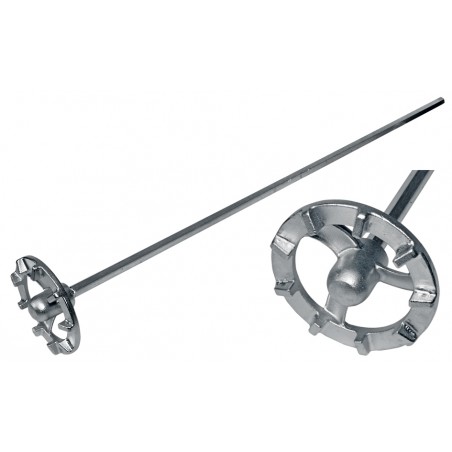
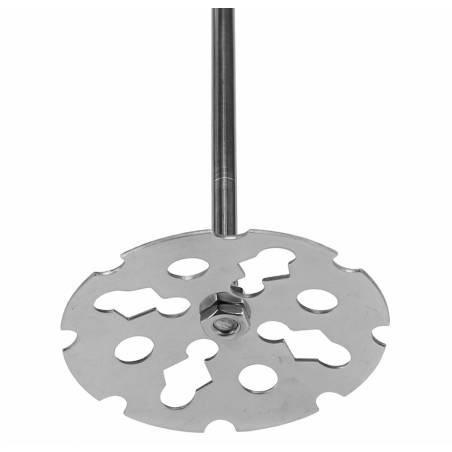
- Adaptable impeller (€32) — fits a drill and works inside a settling tank you already have. The cheapest way to start.
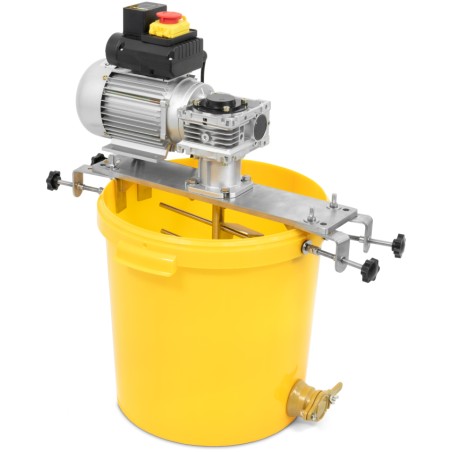
- Complete creamers — up to €9,200, with motor, timer and temperature control, for regular production.
The mistake that ruins the job
Stirring air in. If the impeller works at the surface or at too many revolutions, it takes in bubbles and the jar ends up with white foam on top. Stir slowly, with the impeller submerged, and let it settle before filling. The rest of the line, in order, is in honey house.
Is any honey suitable for creamed honey?
No. What governs it is the glucose-to-fructose ratio. Rape, clover, sunflower, alfalfa and almond crystallise favourably; with those, creaming almost takes care of itself.
Those higher in fructose — acacia or chestnut — stay liquid for much longer and need a different approach if you want cream. And there is variation from year to year with the same bloom, so it is worth testing by batch before committing production.
Why do I get white foam when homogenising?
Because you are introducing air. Homogenising properly is not whipping hard: a good mixer creates laminar, not turbulent flow, keeps the blades covered in honey at all times and lets you adjust speed and time.
If the blades break the surface or you run too fast, you drag in bubbles and that white layer appears on top. Other signs of overdoing it: poorly mixed zones, loss of aroma and unwanted lightening of dark honeys. To get it flowing, warming to around 40 ºC is usually enough — more heat moves it better but raises HMF and takes the aromas with it.