
-
Beehives
- Complete beehive
- Accessories
-
Nuc hives
- Nucs by format
- With bees & mating
- Spare parts
-
Bee equipment
- For the apiary
- For the beekeeper
-
Clothing
- Clothing Accessories
-
Beeswax
-
Pure beeswax
- Beeswax and foundation
- Beeswax foundations
- Melting and rolling beewax
-
Pure beeswax
-
Bee feed
- Accessories and source materials
- Utensils
-
Bee health
- Varroa Treatments
- Diseases control
- Nutraceuticals
-
Extraction and bottling
- Before extraction
- Honey extraction
- After extraction
-
Bee pollen
- Harvest
- Indicted
-
Honey packaging
- Flasks per utility
- Flasks by size
- Other packaging
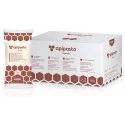 Apipasta with vitamins 15kg
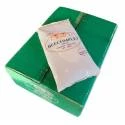 Beecomplet® Spring 14Kg
 Beekeeper suit with round veil
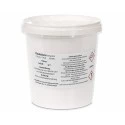 Oxalic acid 1kg
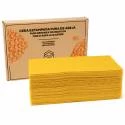 Beeswax Foundation 5kg
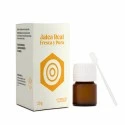 Fresh royal jelly 20g
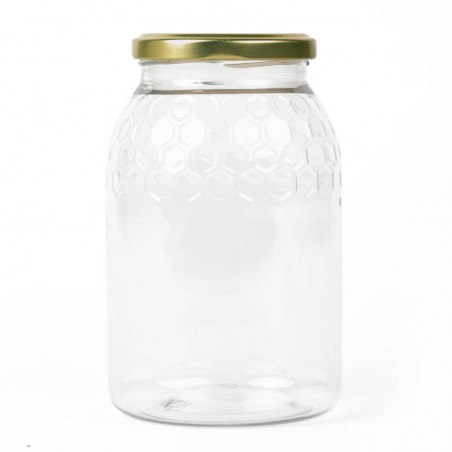
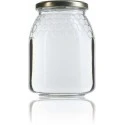 Classic honey jar 1kg comb-lines TO77 - Pack of 16 units
 Promotor L Apis 1 litre
Honey Packaging
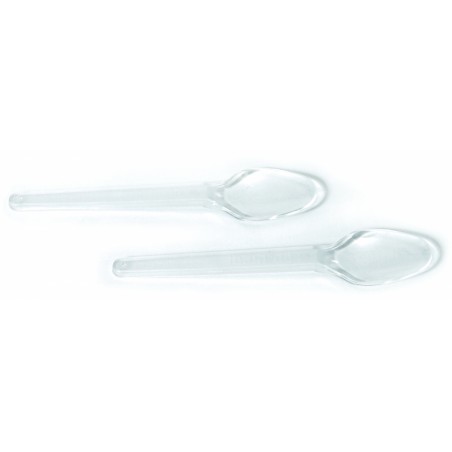
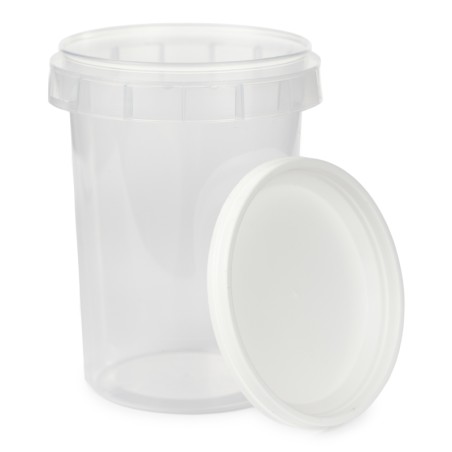
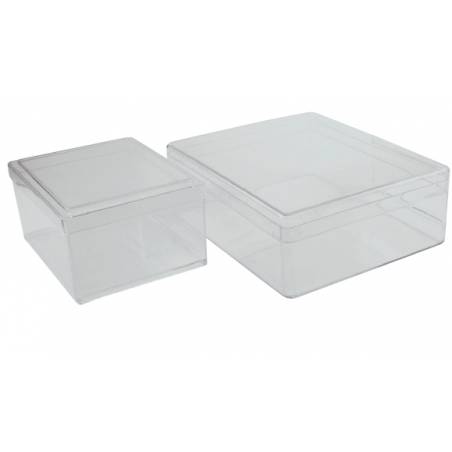
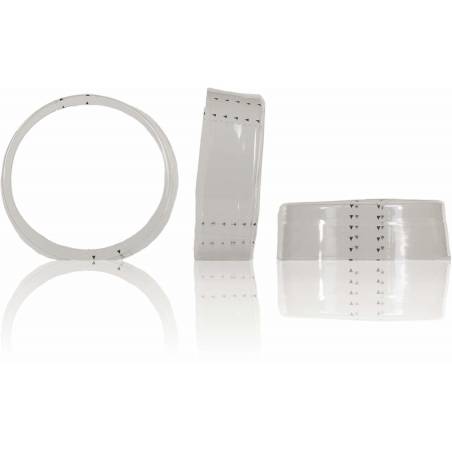
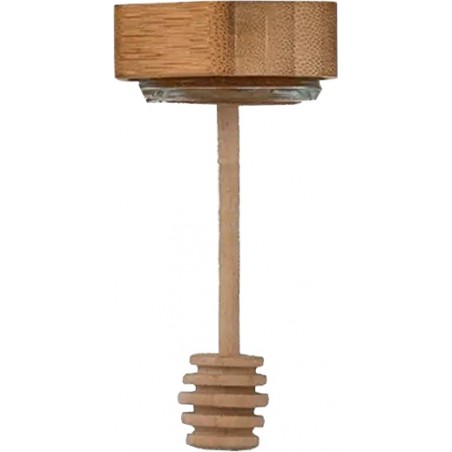
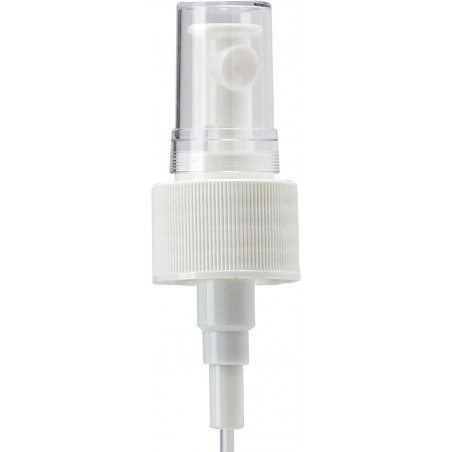
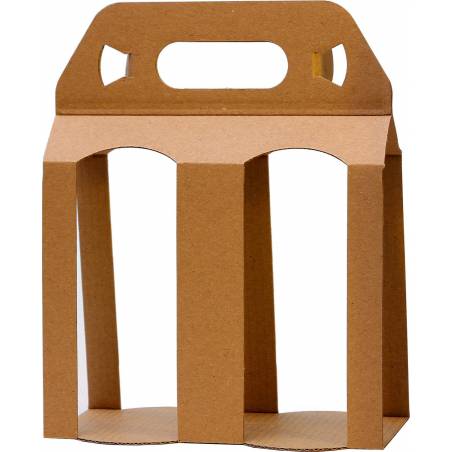
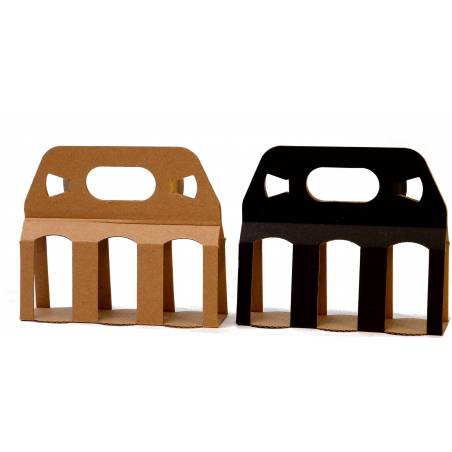
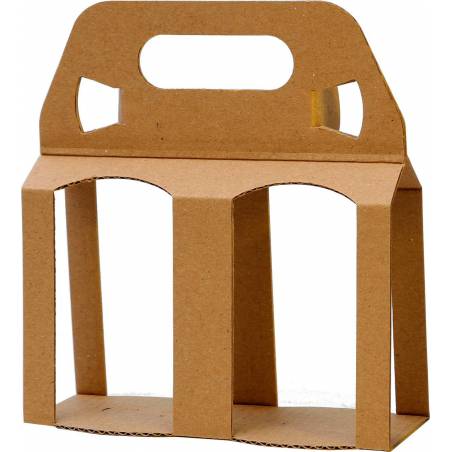
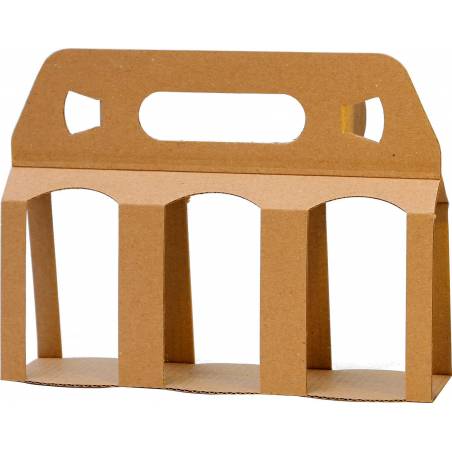
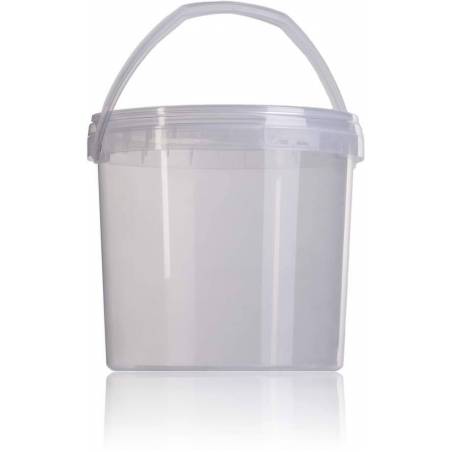
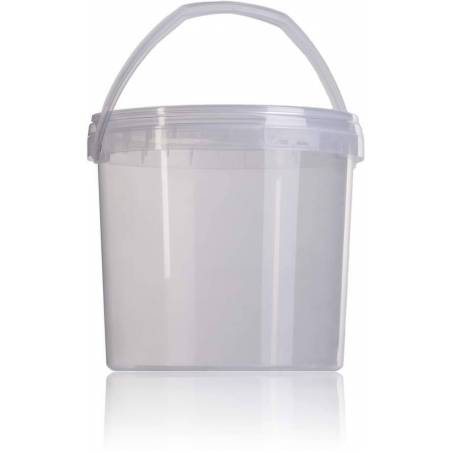
Glass jars from 33 ml to the 1,966 ml half-gallon, with TO mouths from 43 to 110 mm, standard and Deep, nearly all sold without lids: the TO lid is chosen separately. NICOT plastic tubs with lid included, royal jelly bottles (PP28 thread) and propolis dropper bottles (DIN18), labels, tasting spoons and cups, and cardboard and comb-honey boxes.
- Other packaging
Capacity
Finish
Honey capacity
Categories
Price
-
€0.00 - €29,950.00
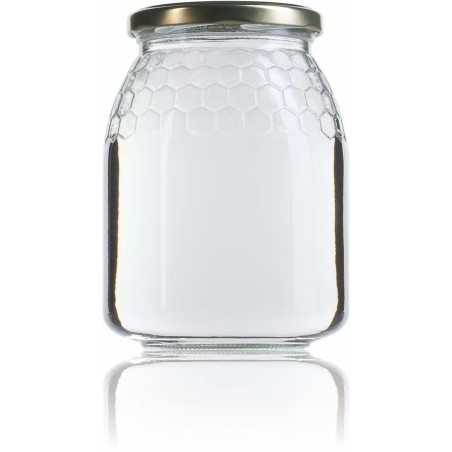
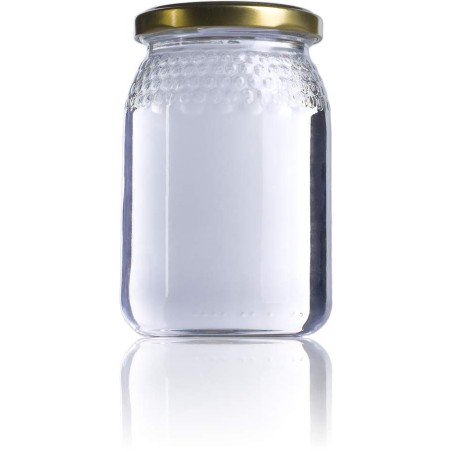
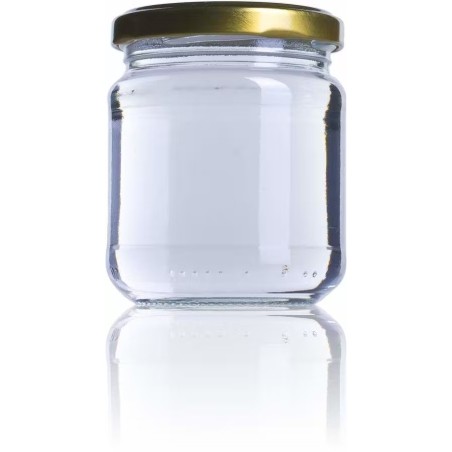
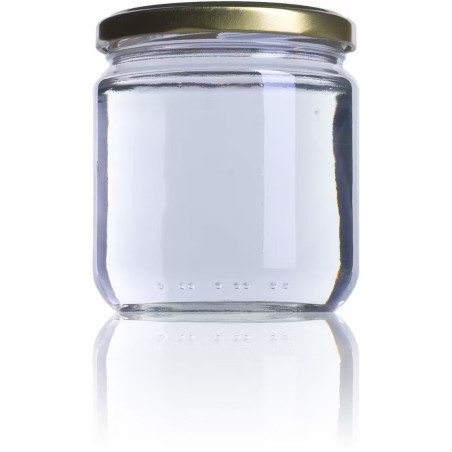
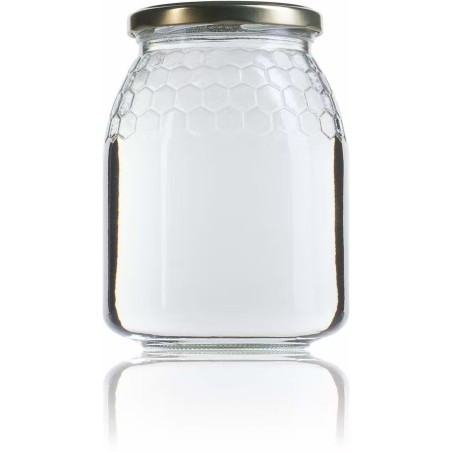
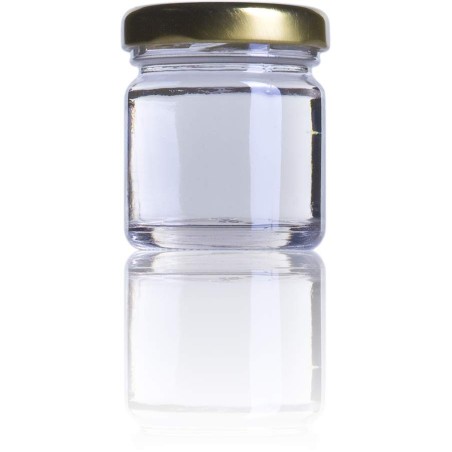
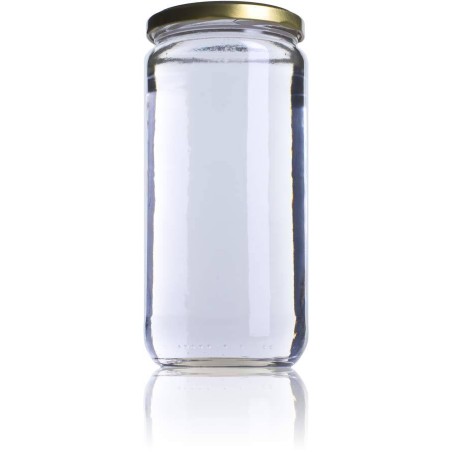
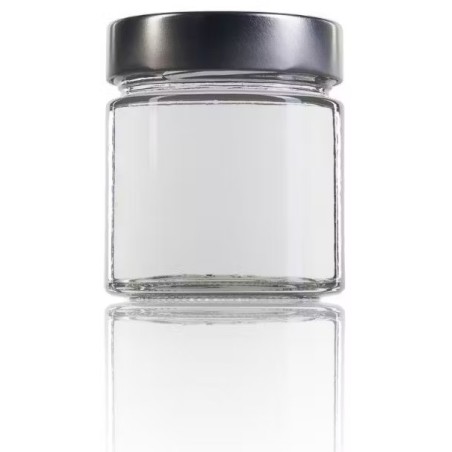
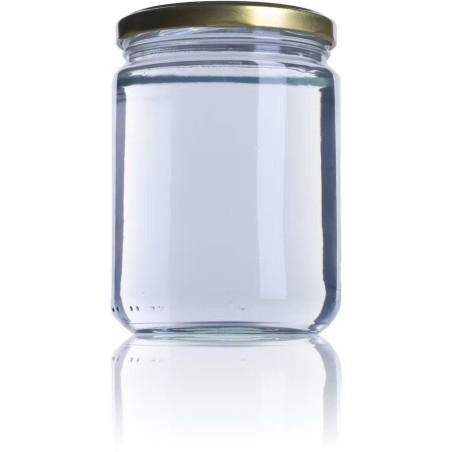
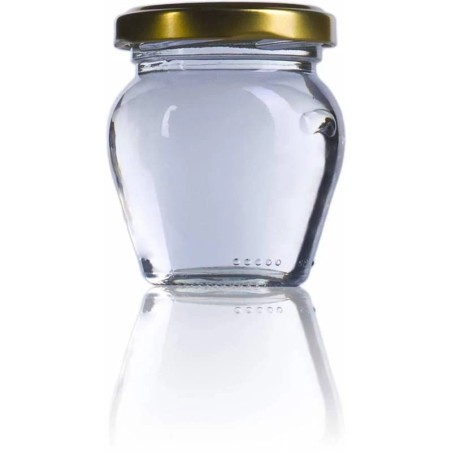
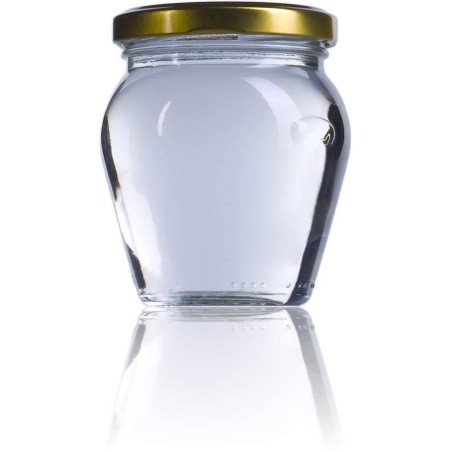
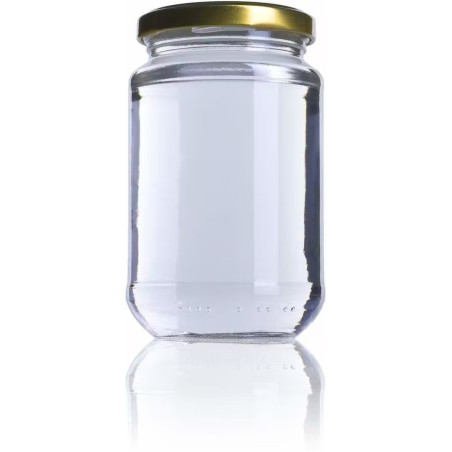
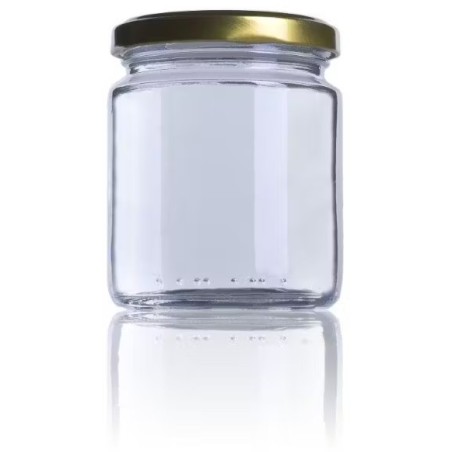
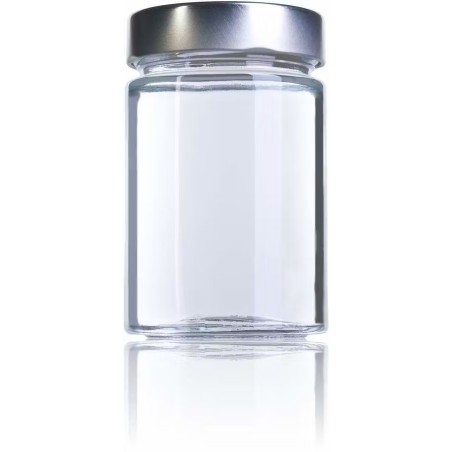
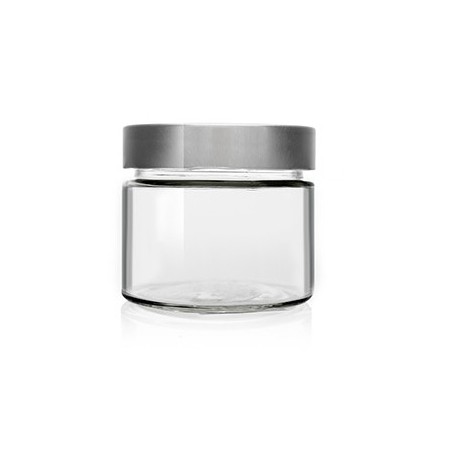
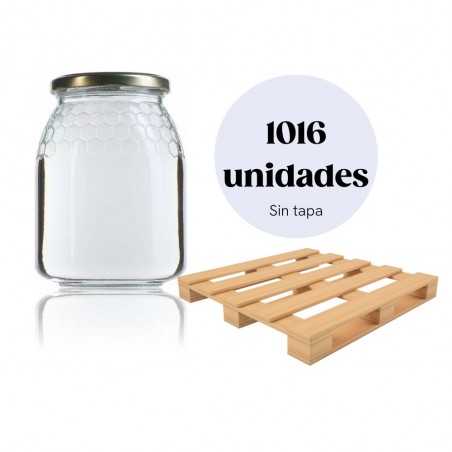
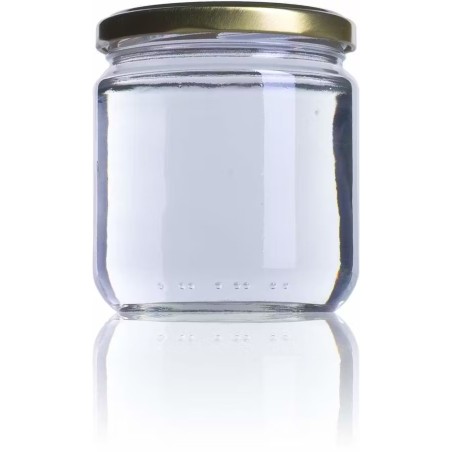
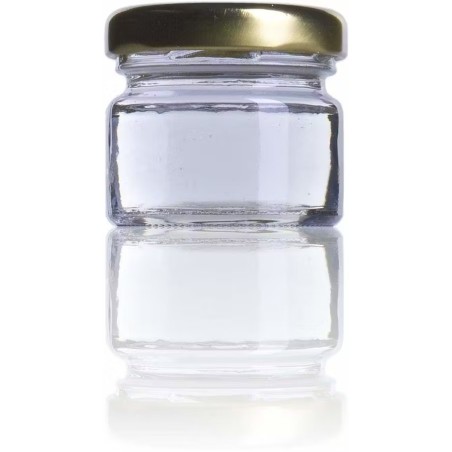
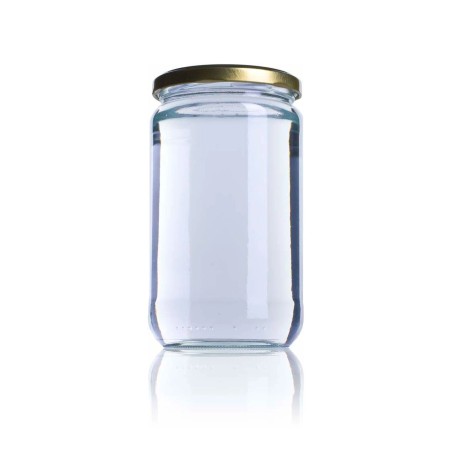
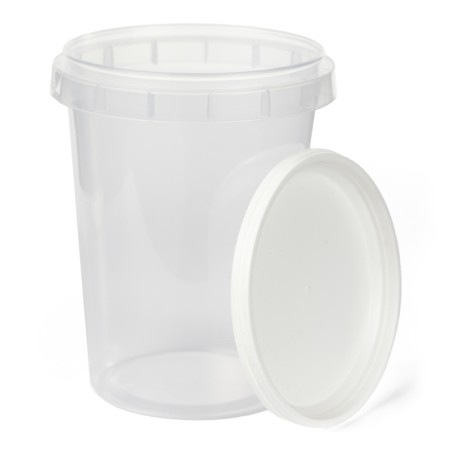
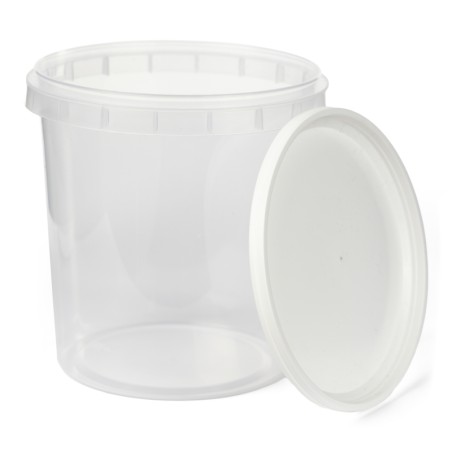
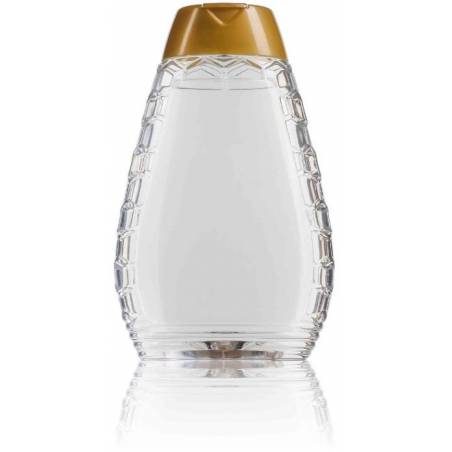
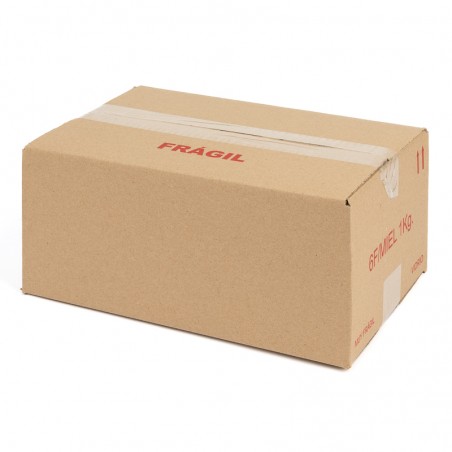
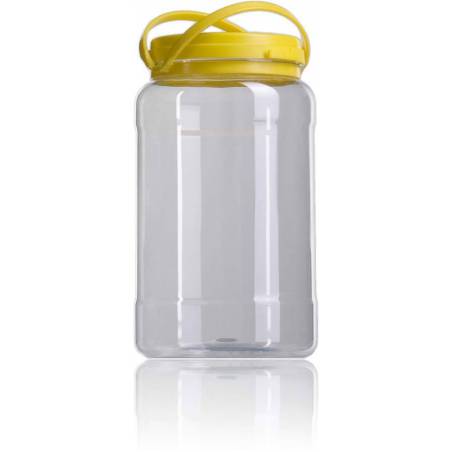
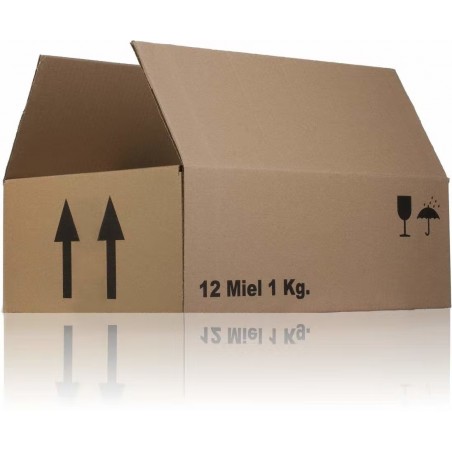
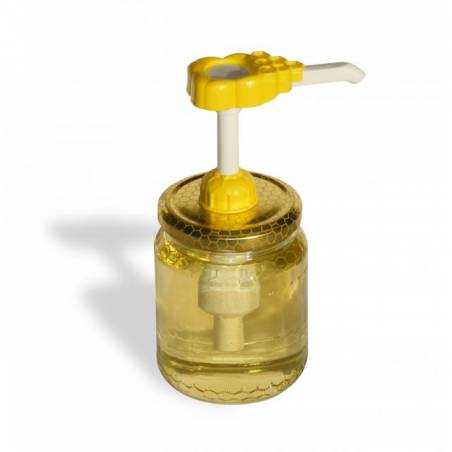
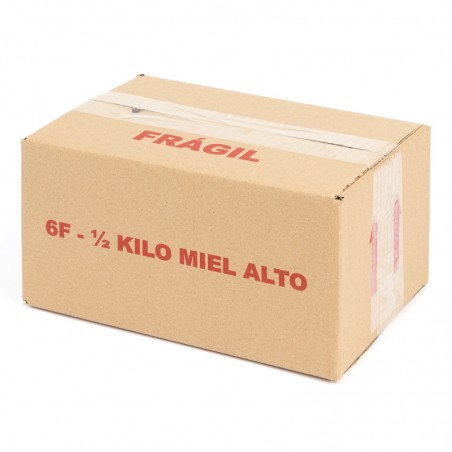
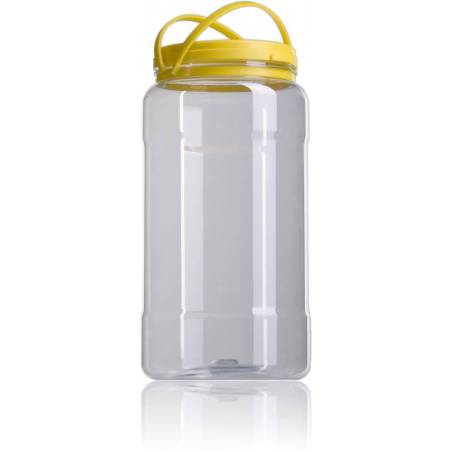
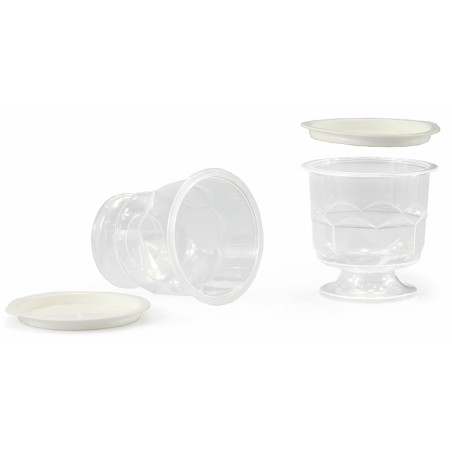
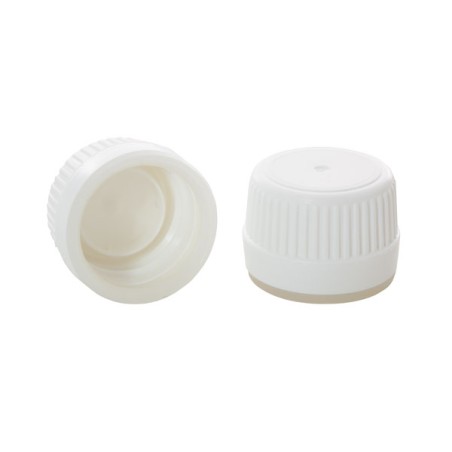
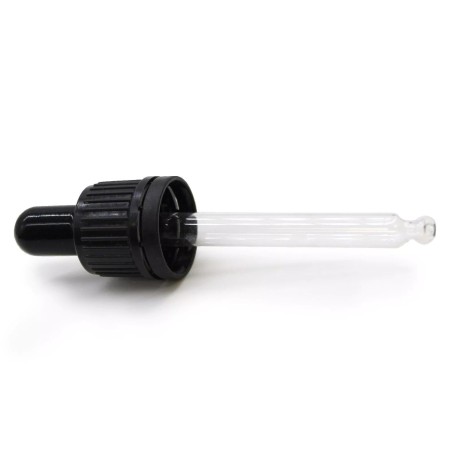
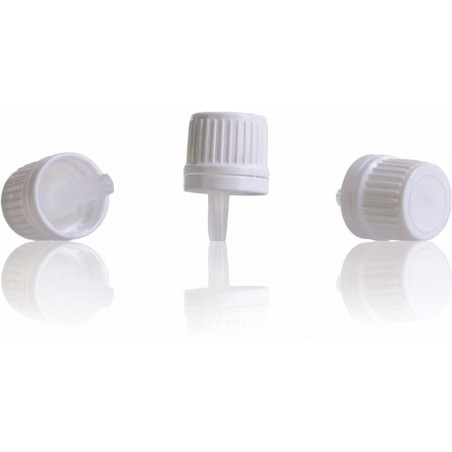

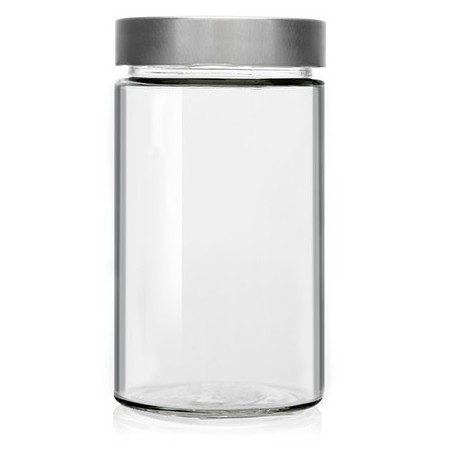
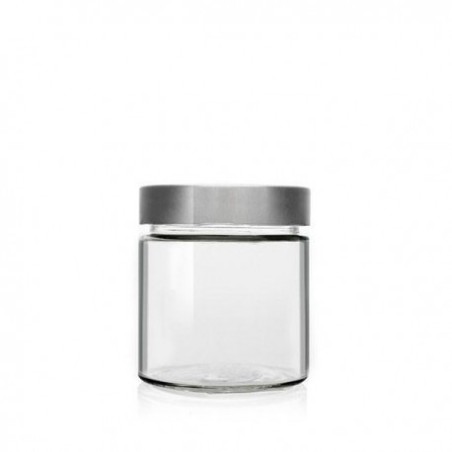

My advice: test jar and lid before buying the pallet
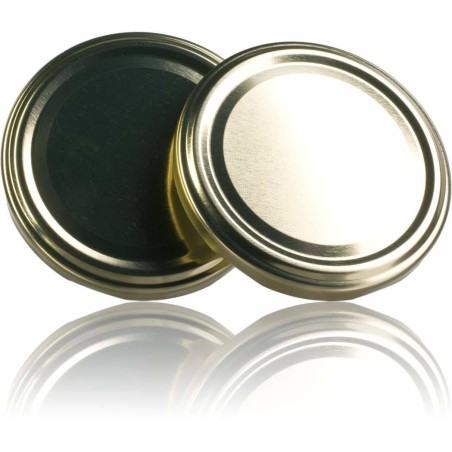
One complaint we get with TO lids is that they cross-thread: we had to refund an order of TO63 lids for that reason, and we have also had closure complaints with the TO66, the TO77 and the high-skirt TO70. So, before the pallet, fill and close the 16- or 25-pack of the same jar with your honey and the lid you are going to use, by hand or with your capping machine, and leave it for a few days before deciding.
Two more warnings. Vacuum is not checked by a click, because our lids have no safety button: as the jar cools, the centre stays slightly sunken and does not give when you press it. And if you want to boil the lids, only pasteurisable ones, loose and within the limit on their product sheet.
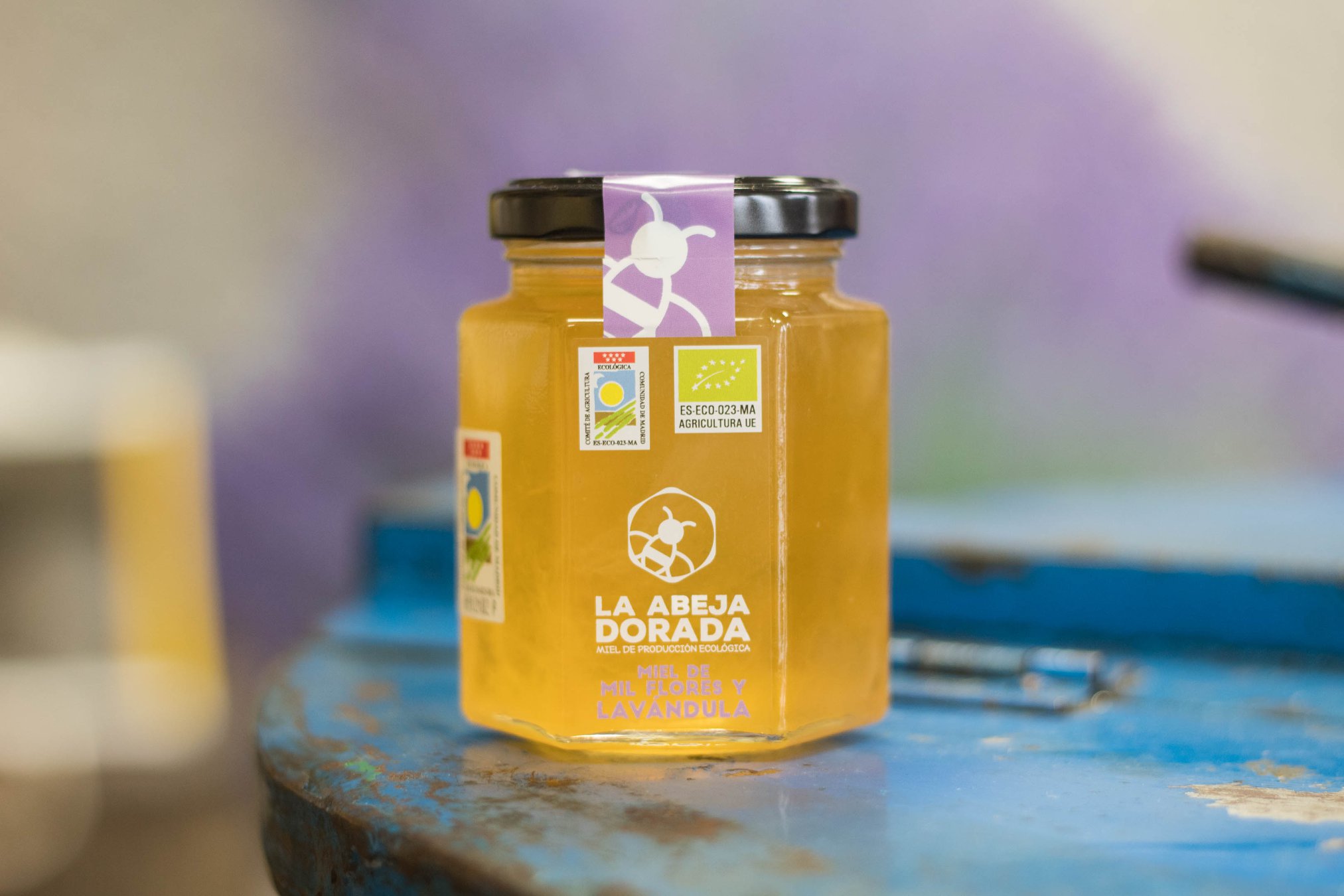
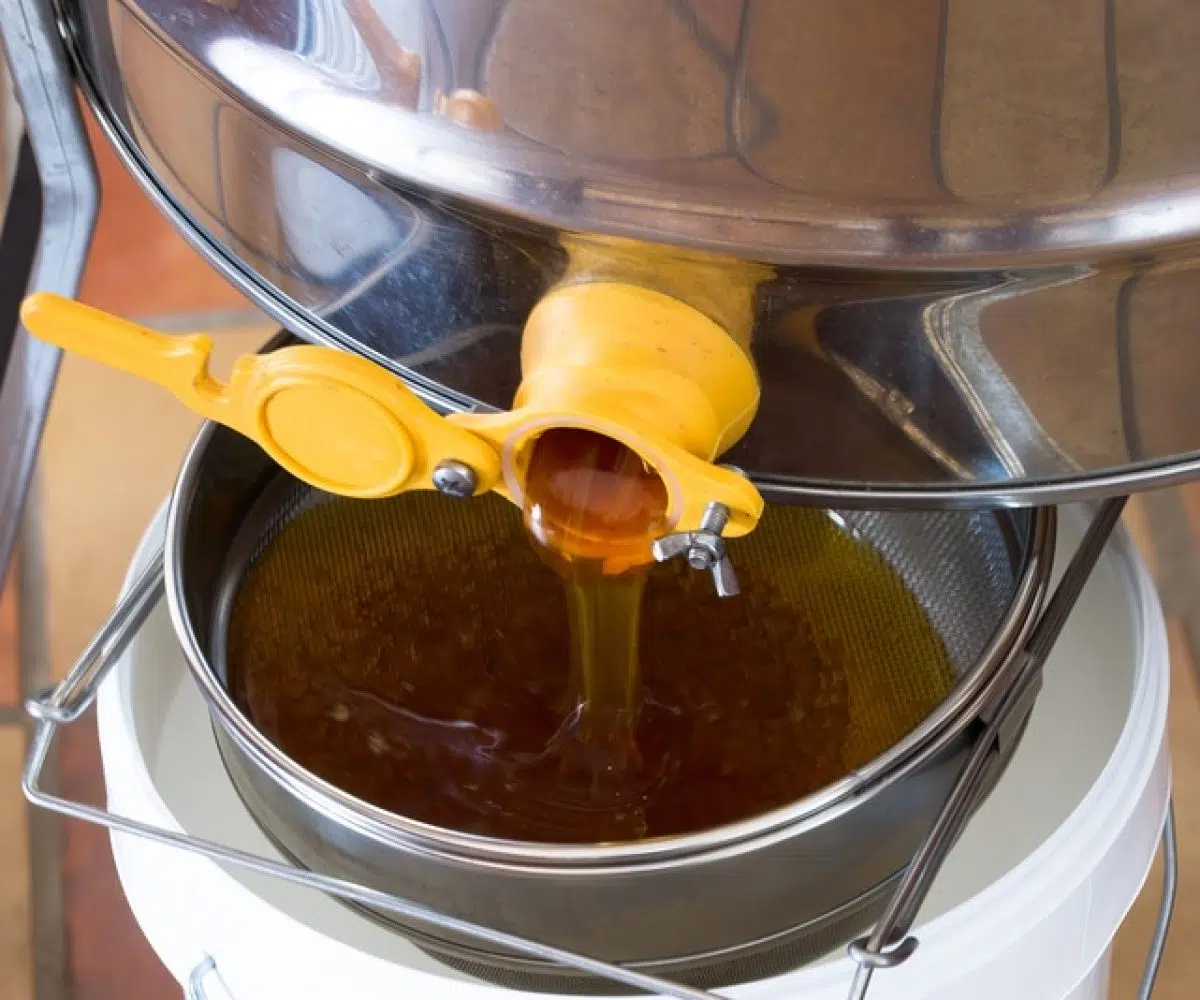
Honey Packaging
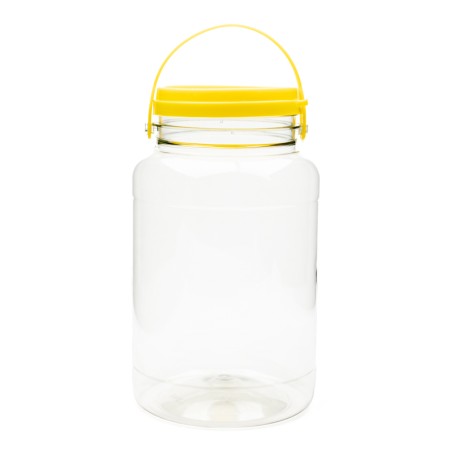
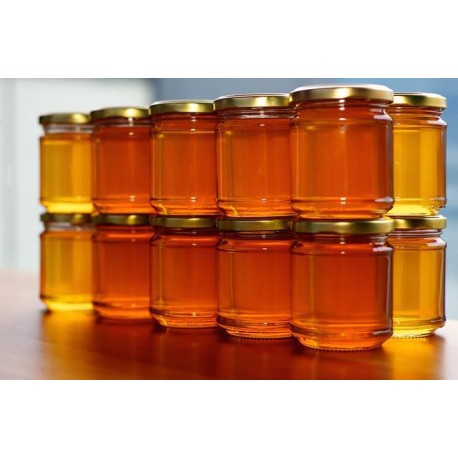
Glass honey jars come in different shapes and neck finishes; food-contact plastic containers reduce container weight. Match each format with compatible lids and closures, and check the product details to see whether they are included.
Choose the complete set, from filling to delivery
For liquid or creamed honey, direct sales or transport, consider how the container is filled, closed and used. A wide opening makes crystallised honey easier to spoon out; an embossed jar may leave less flat space for the label.
- Usable capacity. Millilitres express volume; the grams on the label express honey mass. As a guide, 1 litre of honey weighs around 1.4 kg. Check whether the stated capacity is brimful or filling capacity and confirm the net weight on a scale.
- Neck finish and lid. Check the full code: standard TO63 and TO63 Deep require different closures. PP28 is the thread of royal jelly bottles and DIN18 that of propolis dropper bottles. A similar diameter does not establish compatibility.
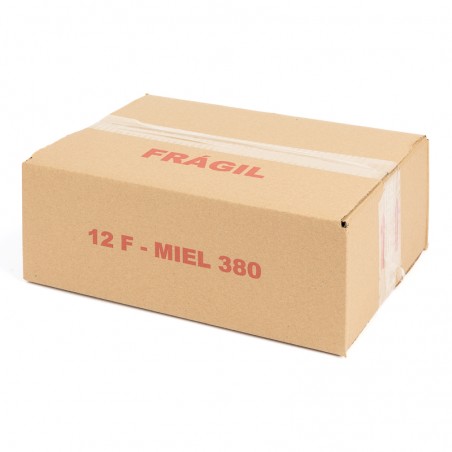
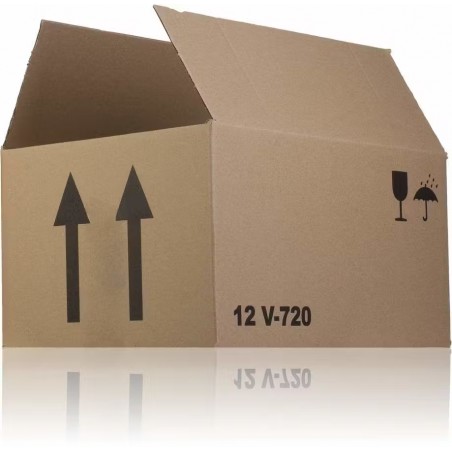
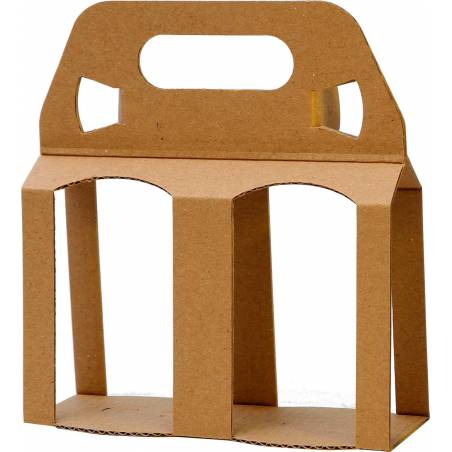
- Conditions of use. Confirm that both container and closure are suitable for food contact, and check their permitted temperatures. Glass or food-contact plastic is not automatically suitable for every heating process. To ship by courier, wrap each jar: our cardboard boxes group the jars but have no dividers, and glass breaks at the shoulder, where one jar knocks against the next.
Leave room for your honey information
Measure the available area before printing: mandatory information needs an x-height of at least 1.2 mm, or 0.9 mm if the largest surface of the pack is under 80 cm² (Regulation (EU) 1169/2011, Art. 13), and the name and net quantity must share the same field of vision. For a blend of honeys from several countries, Spanish rules require all countries in the principal field of vision, in order of weight and with their percentages (RD 1049/2003). Keep the batch and best-before date accessible too. You will find labels in Honey labels.
Do glass and plastic containers preserve honey equally well?
For normal use, yes, as long as they seal well: what spoils honey is not the material but water and heat. To keep it for years, glass is better: it is impermeable, and plastic is not entirely. Honey with 18.3% water or less absorbs moisture from the air above 60% relative humidity (Bogdanov), and above 18.5% water it can ferment (glossary of ¡Quiero ser apicultor!). Heat raises HMF: at 20 °C honey takes 2 to 4 years to reach the legal limit, and at 30 °C, six months to a year (table in ¡Quiero ser apicultor!). A tightly closed container and a cool, dry store.
How can I check that a container is suitable for honey?
By checking its declaration of compliance: on most of our product pages you will find it in the attached documents, and if yours does not have it, ask us for it. Every food container must comply with Regulation (EC) 1935/2004, and for plastics and lid gaskets Regulation (EU) 10/2011 requires that declaration, which states the foods, contact time and temperature it is suitable for: check it especially if you are going to warm or pasteurise. The glass-and-fork symbol identifies food use, but it is not compulsory when the item is clearly intended for food.
What capacity do I need for 500 g or 1 kg of honey?
As a guide, 1 litre of honey weighs around 1.4 kg, based on Stefan Bogdanov’s tables: 500 g takes up roughly 360 ml and 1 kg around 715 ml. These are estimates; density changes with moisture content and temperature. A jar’s brimful capacity is also different from its usable filling volume. Choose a size that leaves room for proper closure and check the net weight using your honey, deducting the container’s tare weight. Do not set the quantity on the label solely from the millilitres in the catalogue.
How do I choose a container for liquid, creamed or crystallised honey?
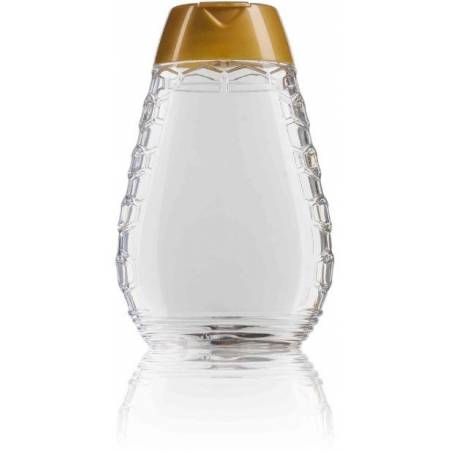
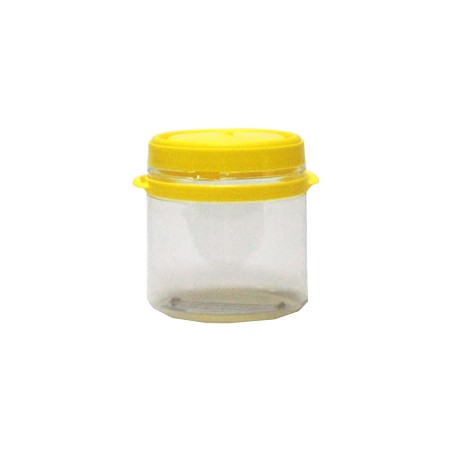
For creamed or crystallised honey, a wide mouth, TO77 or larger: the spoon goes in and nothing is left at the bottom, as with the 1 kg honeycomb-pattern jar with a TO82 mouth or the TO89 and TO100 tubs. For runny honey your customer will pour, the drip-free container of 350 or 500 g. And buy the lid by the full neck code: a standard TO82 lid does not close a TO82 Deep jar.